

The Porch
A quiet place to sit. You’re welcome here.
The Porch
A quiet place to pause. A space to be heard. A reminder that you don't have to carry everything alone.
These reflections are part of The Direction Series, but they're written for the in-between moments — when you need a breath, not an answer.
Make yourself at home.
The Porch exists to create a safe, hospitable space for reflection — where presence matters more than productivity, and people are reminded they are seen, heard, and not alone.
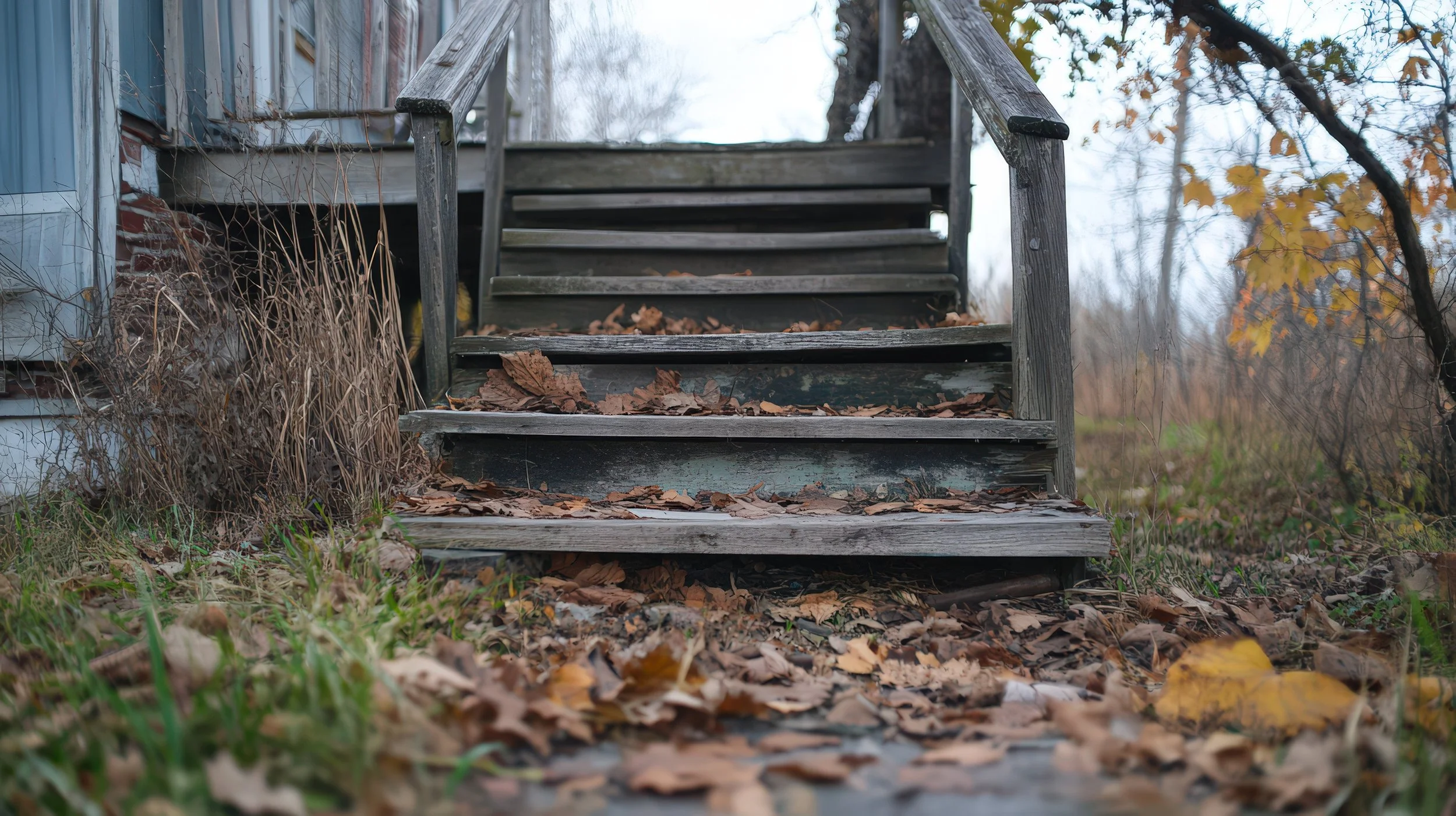
Why the Same Things, Over and Over
Transformation is rarely dramatic. More often, it is the same small practice, repeated, until something quiet in you starts to settle. The repetition is not the obstacle. The repetition is the work.
Category: Theme — Volume 1 · 4 min read
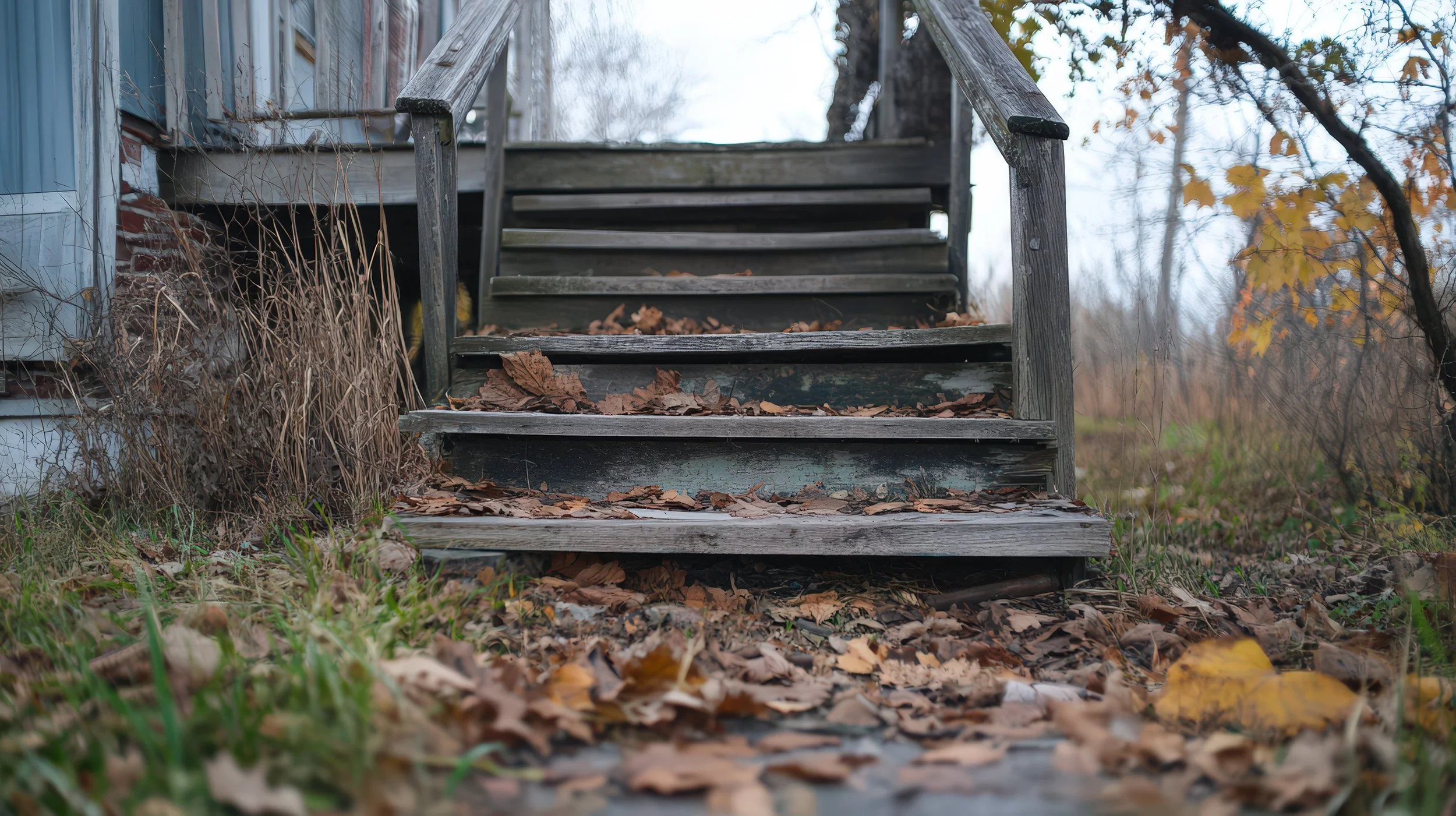
Transformation is rarely dramatic. More often, it is the same small practice, repeated, until something quiet in you starts to settle. The repetition is not the obstacle. The repetition is the work.
Somewhere around the third week, it starts to feel pointless.
You've been getting up earlier. Or you've been reading the same few pages each morning. Or you've been praying the same short prayer about the same unmoved situation, and by now you can hear how worn the words have gotten in your own mouth.
And a thought shows up, reasonable and quiet: this isn't doing anything.
I want to sit with that thought, because I think it's the single most common place people quit — and I think it's built on an assumption almost nobody examines.
The assumption is that spiritual change should feel like progress while it's happening.
That if something were working, you'd notice. That the right practice would produce a detectable result — a warmer feeling, a clearer sense of direction, some evidence you could point to at the end of the week and say, there, that's different.
But almost nothing that actually forms a person works that way.
Think about how you learned anything you're now good at. The first hundred times were not interesting. They didn't feel like mastery. They felt like repetition with no obvious return, and the return showed up much later, all at once, in a moment you weren't paying attention.
Formation is like that. The change happens below the line where you can observe it, and it surfaces on a delay.
There's a line in Proverbs that teaches us that a person who accepts correction gains understanding (Proverbs 15:32).
I think of it like ground being worked before anything is planted in it. Not the harvest. Not even the seed. The slow, unglamorous business of breaking up soil that's gone hard.
Nobody photographs that part. There's nothing to see. A field being prepared and a field being neglected look nearly identical from the road.
But one of them is ready when the season turns, and the other isn't.
Here's what I've come to believe about the repetition. It isn't there to produce a feeling. It's there to make a groove.
The first time you choose not to say the sharp thing, it takes everything you have. The fortieth time, it costs less. Not because you've become a better person by force of will, but because you've worn a path — and the path is now slightly easier to walk than the old one.
That's what practice does. It doesn't manufacture holiness. It lowers the cost of the right response until the right response becomes available to you at three in the afternoon on a hard day, when you have nothing left to deliberate with.
Which means the boring mornings are not the price you pay for the good ones. The boring mornings are the thing.
I want to be honest about the part of this that's hard.
You will not be able to tell whether it's working. That's not a flaw in your practice — it's the nature of the process. The evidence arrives late, and it usually arrives in a form you didn't expect: not a feeling, but a moment where you respond differently than you would have a year ago and only notice afterward.
So the question isn't is this doing anything. You can't answer that from inside. The question is whether you'll keep showing up during the stretch where you can't tell.
There's a line about not growing weary in doing good, because there's a harvest coming if we don't give up (Galatians 6:9). Notice what it assumes. It assumes weariness is normal. It assumes the gap between the work and the result is long enough that quitting becomes a live option. That's not written for people having a wonderful time. It's written for people in week three.
You don't have to feel it working.
You just have to keep turning the soil.
Volume One of the Direction Series is called Preparation. If this sat with you, you can begin at directionseries.com.
The Porchlight is on. 🔆
© 2025 Wylette P. Tillman | Polaris Press LLC.

How Do You Know You've Lost Your Peace?
Sometimes you don't notice it leaving. You only notice the difference once it's gone — the tightness in your chest, the urge to fix what doesn't need fixing, the words you didn't need to say.
Category: Question · 2 min read

Sometimes you don't notice it leaving. You only notice the difference once it's gone — the tightness in your chest, the urge to fix what doesn't need fixing, the words you didn't need to say.
You usually can't name the day.
That's the strange part. Peace doesn't slam the door on its way out. It doesn't announce anything. It just isn't there one morning, and you couldn't tell anybody when it stopped being there.
So how do you know?
You find out sideways. Through symptoms.
You start rehearsing conversations that haven't happened yet — arguing your side in the shower, in the car, with someone who isn't there.
You start fixing things that don't need fixing. Rearranging the garage at nine at night. Handling something small with a lot more force than it required.
You're short with the people you're least angry at. Not the person who actually caused it. The ones who happened to be standing there.
And you can't sit down. Or you can, but it feels like something's being neglected while you do it, so you get back up.
None of those are the problem. They're the readout.
Here's what I think is actually happening underneath.
There's a line where Paul tells a church to let the peace of Christ rule in their hearts (Colossians 3:15). The word behind rule isn't a throne word. It's a sports word — it means to act as umpire. The one who stands over the play and makes the call.
Which means peace was never mainly a feeling you get to enjoy. It was meant to be the thing that settles the question when two parts of you disagree.
So when peace goes, you don't just lose a pleasant sensation. You lose the umpire. And every small decision — should I say something, should I let it go, is this mine to carry — goes to arbitration. All day. In your head.
That is why you're so tired. You've been running the court yourself.
As for how it left: it's rarely one dramatic thing. Usually it's a series of small unmade decisions, or something you agreed to carry that was never actually yours, and you didn't notice the weight until you'd been under it a few months.
I'm not going to hand you five steps to get it back. I don't think it works that way.
But I'd point at one thing. Jesus said peace I leave with you (John 14:27). Left. Past tense. Already done, already handed over.
Which changes the question. It isn't how to obtain something you're missing. It's what you're doing that keeps you from receiving something that's already been set down in front of you.
That's a harder question. It's also a better one.
For tonight, don't try to answer it. Just find the date.
When did you last feel settled? Not happy. Settled.
Start there. Naming a thing isn't the same as fixing it — but nothing gets fixed that hasn't first been named.
If something here resonated with you, The Direction Series was written for exactly where you are. I would love to invite you in — you can find it at directionseries.com.
The Porchlight is on. 🔆
© 2025 Wylette P. Tillman | Polaris Press LLC.
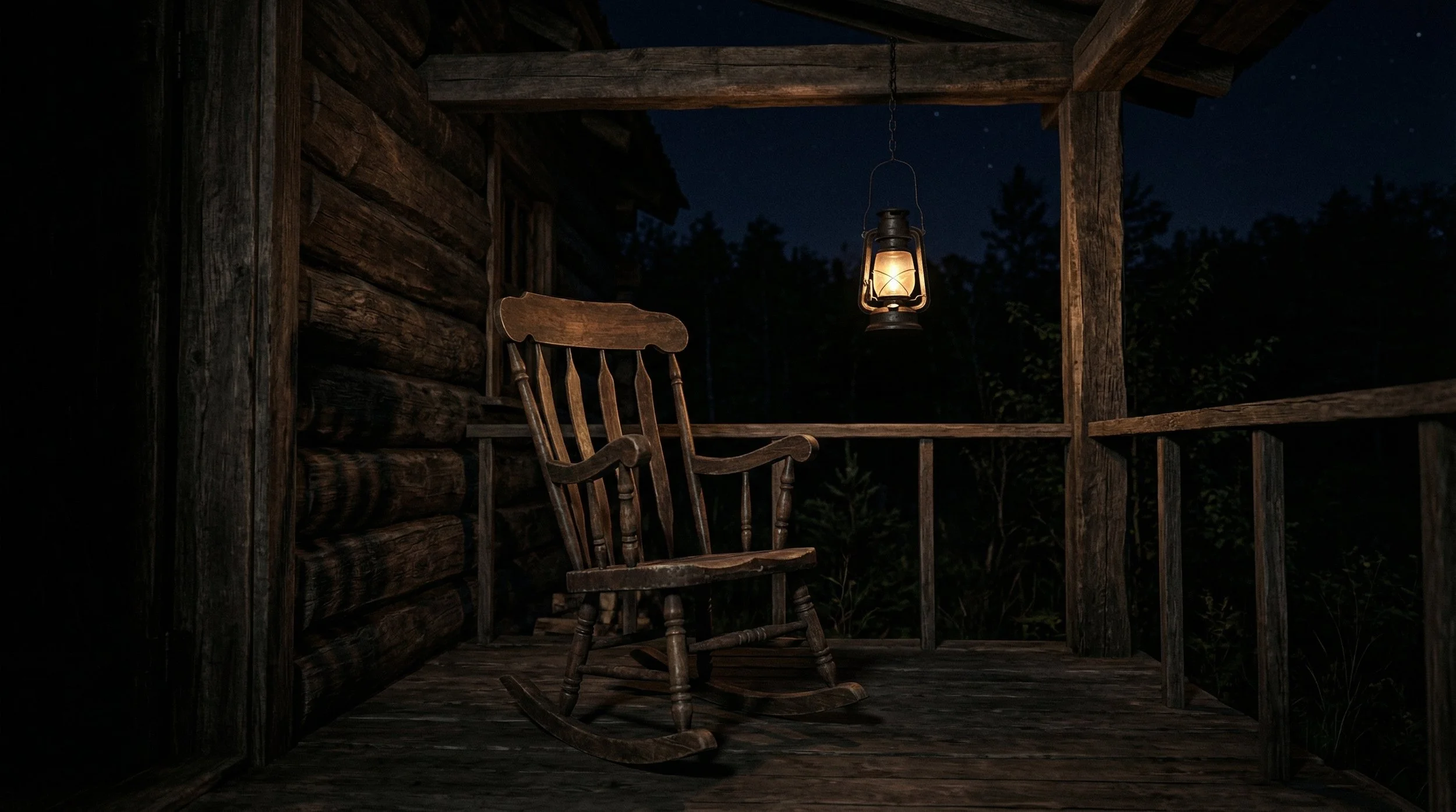
When You Would Rather Stay Quiet
There is a version of obedience that does not look heroic. It looks like a quiet not me that takes years to become a quiet yes. This post is for the part of you that is still wrestling.
Category: Reflection · 3 min read
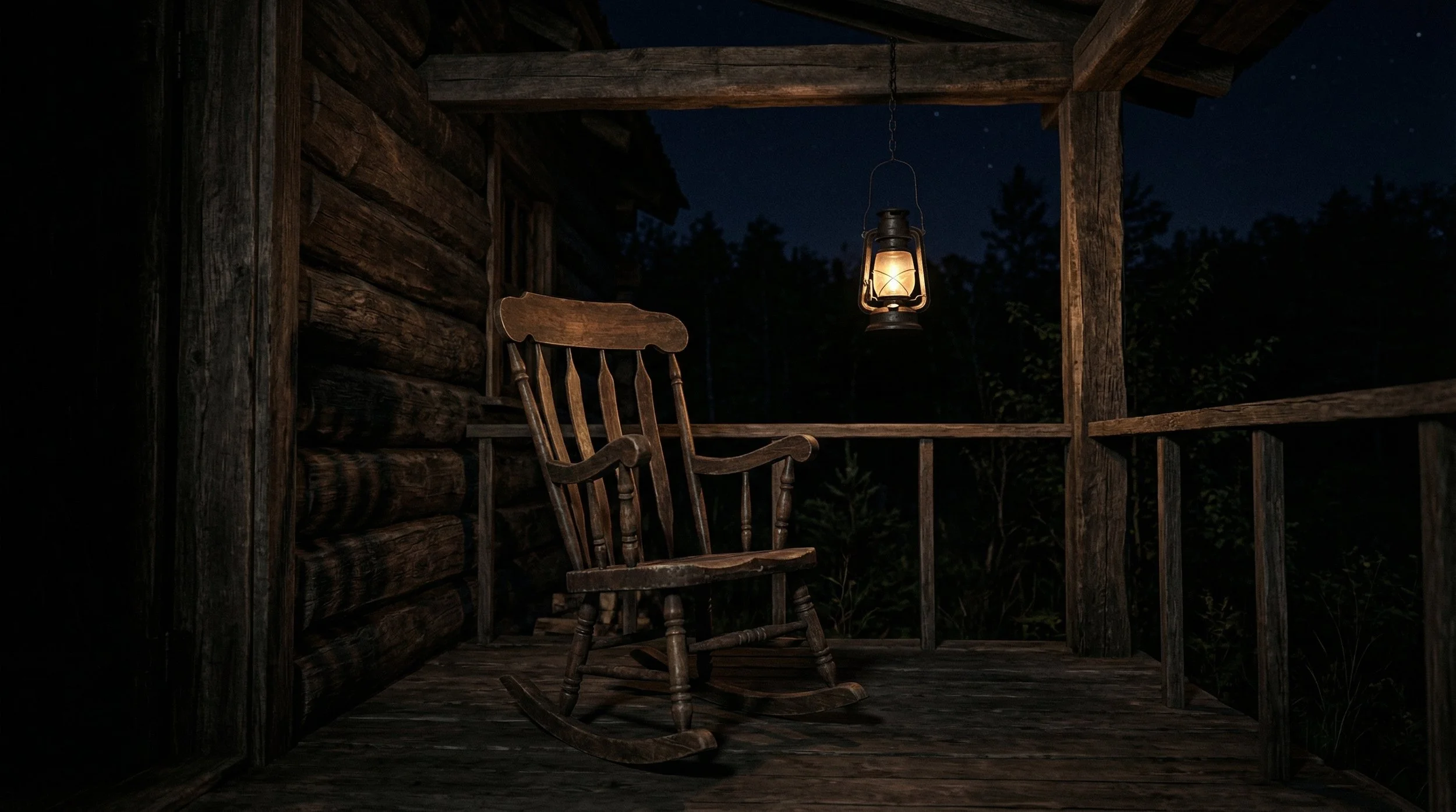
There is a version of obedience that does not look heroic. It looks like a quiet not me that takes years to become a quiet yes. This post is for the part of you that is still wrestling.
You know the thing.
You don't have to think hard about it. It surfaced the second you started reading — the thing you've known you were supposed to do for a while now, and haven't done.
Maybe it's a conversation you owe somebody. Maybe it's praying out loud at your own table instead of waiting for someone else to. Maybe it's saying something true to your kid about where you actually are with God, instead of the version you've been performing.
You haven't refused it. That's the strange part. You've never once said no.
You've just stayed quiet and hoped it would pass to somebody else.
I want to say something about that, because I think most of us assume the quiet is the problem. That real faith would have moved by now. That the people who actually follow God do it the way it looks in the sermon illustration — clean, immediate, unhesitating.
That is not how it goes in the book.
Moses spends forty years in the desert, and when the bush finally burns and God tells him what he's for, his answer is not yes, Lord. It's an argument. Who am I to do this (Exodus 3:11). What if they ask me your name (3:13). What if they don't believe me (4:1). I'm not good with words — I never have been (4:10). And when he's out of reasons, when there's nothing left to hide behind, he says the most honest thing in the whole exchange: please send somebody else (Exodus 4:13).
He gets sent anyway.
Not because he talked himself into enthusiasm. He never did. He went with the objection still in his mouth and his brother tagging along to do the talking.
That's what I want you to sit with. The yes that eventually came out of Moses was not a brave yes. It was a worn-down one. And it counted.
There's another one I think about. Gideon is threshing wheat in a winepress — down in a hole, out of sight, doing openly-impossible work in a hidden place because it isn't safe to do it in the open. And that's where he gets called a mighty warrior (Judges 6:11–12). Not after. During. While he's hiding.
His first response is to point out that his clan is the weakest one and he's the least in his father's house (6:15).
He wasn't wrong about any of that. He was just wrong about what it meant.
Here is what I've come to think. The wrestling isn't evidence that you've failed to obey. Very often it's evidence that you actually understand what's being asked of you. The people who say yes instantly are sometimes the ones who haven't done the math yet — who don't know what it's going to cost, or who they'll have to become, or what happens if it doesn't work.
You know. That's why you're quiet.
I'm not going to tell you to hurry. Some yeses take years to arrive, and the years are not wasted. The not me wears down slowly, in the direction of a yes you couldn't have manufactured on your own.
But don't leave the conversation.
That's the only thing I'd ask. Stay in it. Keep bringing the objection back to the One who can actually answer it, instead of going silent and calling that peace.
Because the part of you that is still wrestling is not the part that's failing.
It's the part that's still listening.
If something here resonated with you, The Direction Series was written for exactly where you are. I would love to invite you in — you can find it at directionseries.com.
The Porchlight is on. 🔆
© 2025 Wylette P. Tillman | Polaris Press LLC.

What God Does Before He Sends You
Before the door opens, something shifts in you. The seasons that feel like waiting are often the seasons where the deepest work is being done — quietly, internally, in the parts of you no one else can see.
Category: Reflection · 3 min read

Before the door opens, something shifts in you. The seasons that feel like waiting are often the seasons where the deepest work is being done — quietly, internally, in the parts of you no one else can see.
There is a particular kind of quiet that comes after you say yes.
Not the yes you announce. The private one. The one that happened in the car, or at three in the morning, or standing at the sink — where something in you finally stopped arguing and said, alright. I'm willing.
You expect something to happen next.
And then Monday comes. Same drive. Same inbox. Same people needing the same things from you at the same hour they always need them. Nothing outward has moved at all.
So you start to wonder whether you imagined the whole thing.
Here is what I've come to believe about that stretch of road: it isn't the delay before the thing. It is the thing.
Samuel anoints David in front of his entire family — oil running down, brothers watching, the youngest one chosen (1 Samuel 16:13). And the very next thing that happens is that David goes back to the sheep. Not to a throne. To the field, the same animals, the same chores he had the week before. Years pass that way.
Moses knew at forty what he was supposed to be for. He acted on it in his own strength, and badly, and ended up on the back side of the desert keeping a flock that wasn't even his (Exodus 2:11–15; 3:1). Forty more years out there. The bush didn't burn until he had been in that field long enough to stop being the man who thought he could handle it himself.
Neither of them was being stored. They were being changed.
Something has to come out of you before you can carry what's coming. The need to be seen doing it. The impulse to force the timing. The version of yourself that would have used the assignment to prove something to somebody. That doesn't leave in a single moment of decision. It leaves slowly, in ordinary weeks where nobody is watching and there is nothing to prove.
And something has to go in. The steadiness. The patience. The particular kind of trust that only grows in a person who has had to keep going without evidence.
I'm not going to tell you that makes the waiting feel better. It doesn't. From the inside, formation never feels like formation. It feels like being passed over. It feels like everyone else got sent and you got left with the sheep.
If that's where you are, I'm not going to rush you out of it.
But I'd ask you to hold one thing while you're there. Work you cannot see is not the same as no work. The most important things happening in you right now are almost certainly not the things you'd list if somebody asked what you'd been up to lately.
The field is not a demotion. It's where the shepherd learned what the king was going to need.
So keep going. Do the ordinary week. Keep the yes even when nothing appears to be coming of it.
Something is being made ready.
It's probably you.
If something here resonated with you, The Direction Series was written for exactly where you are. I would love to invite you in — you can find it at directionseries.com.
The Porchlight is on. 🔆
© 2025 Wylette P. Tillman | Polaris Press LLC.

A Record of Where God Met You
Looking back over the ground you've covered. The moments you almost missed. The places where something shifted quietly and permanently. This is your invitation to mark them.
Category: Reflection · 3 min read

Looking back over the ground you've covered. The moments you almost missed. The places where something shifted quietly and permanently. This is your invitation to mark them.
If you've been here for a while, you've covered a lot of ground.
We started by just sitting. No agenda, no fixing. Then we named some things — the weight you'd been carrying without words, the loneliness of being the strong one, the prayer that felt like it went nowhere, the silence you weren't sure how to hold. We sat with the hard questions and didn't rush them toward answers.
And somewhere in there — maybe without your noticing — something shifted.
That's how it usually happens. We expect God to meet us in the dramatic moment: the mountaintop, the answered prayer with fireworks attached. Sometimes He does. But far more often He meets us in the ordinary, and we only recognize it looking back.
You didn't feel it at the time. You were too busy surviving the week. But now, with a little distance, you can see it — the conversation that landed at exactly the right moment, the strange peace that showed up in the waiting room, the small mercy you almost missed because you were bracing for the next hard thing. The places where, quietly, you were met.
Here is what I want to invite you to do, as we come to the end of this particular stretch of road.
Mark them.
There's a moment in Scripture where the prophet Samuel takes a stone and sets it up in plain sight, and gives it a name: Ebenezer — stone of help. And he says, simply, thus far the Lord has helped us (1 Samuel 7:12). He didn't wait until the whole story was finished. He marked the spot in the middle of the journey, so that every time they passed it, they would remember.
That's what a record of where God met you is. Not a triumphant accounting of a finished life. A stone set down in the middle of the road that says: here. Something happened here. I was met here, even if I didn't have words for it at the time.
Why does it matter? Because a faith with no memory has to learn the same lessons over and over. When you forget where you've been met, every hard season feels like the first one, and you face it with no evidence you've ever been carried before. But when you've marked the stones, you walk into the next valley already knowing you've made it through valleys before. The record becomes the reason you can keep going.
And there's one more reason — close to the heart of why this place exists. In another story, God tells His people to pile up stones so that one day their children will ask, what do these stones mean? — and they'll have something true to tell them (Joshua 4:6–7). The record isn't only for you. It's what you hand the people coming up behind you. It's how the faith gets passed on — not as a defended argument, but as a true story of where you were met.
So look back over the ground you've covered. Find the places. Mark them.
That's where God met you. And the porch light has been on the whole time.
If something here resonated with you, The Direction Series was written for exactly where you are. I would love to invite you in — you can find it at directionseries.com.
The Porchlight is on. 🔆
© 2025 Wylette P. Tillman | Polaris Press LLC.

How to Stay Present When You're Mentally Somewhere Else
Your body is at the dinner table. Your mind is somewhere in next month. This is about coming back — and why it's worth the effort.
Category: Question · 3 min read

Your body is at the dinner table. Your mind is somewhere in next month. This is about coming back — and why it's worth the effort.
You know the feeling, even if you've never named it.
You're sitting across from someone who's talking to you — your child, your spouse, a friend — and you're nodding, you're making the right sounds, and you are not there. You're three steps ahead, in the conversation you have to have tomorrow, the bill that's due, the decision you can't stop turning over. Your body stayed. Your mind left the room a while ago.
And then you blink back in and realize you missed the last thing they said. You missed the look on their face. You were in the room, and you weren't.
If you do this a lot, let me say something gently before any "how."
You are not absent because you don't care. You're absent because you carry a great deal, and a mind that carries a great deal learns to live ahead of itself — scanning, planning, bracing for what's next. That habit kept a lot of things from falling apart. It isn't a character flaw. It's a survival skill that forgot how to turn off.
But here's the cost, said plainly: the future you keep mentally living in does not exist yet. And while you're there, you are missing the only place your life is actually happening — which is here. This table. This face. This ordinary, unrepeatable evening that no one gets back.
So how do you come back?
Not by trying harder to focus — that just adds one more thing to manage. You come back the way you'd gentle yourself toward anything: by noticing, and returning, without scolding.
It looks like this. You notice you've left — I'm in next month again. You don't berate yourself; you just name where you went. And then you come back to one real thing in the room. The warmth of the cup in your hands. The sound of your kid's voice. The light on the table. One concrete thing your senses can actually touch — because your senses only work in the present. They can't reach into next month. They're an anchor, and they're always here.
And then you'll leave again. Five minutes later, probably. That's not failure. That's the practice. Presence isn't a state you achieve once and hold — it's a thousand small returns. You leave, you notice, you come back. You leave, you notice, you come back. The coming back is the thing.
There's something underneath all this worth knowing. When God gives His name in Exodus, He doesn't say I was, or I will be. He says I AM (Exodus 3:14). Present tense. Which means the God you've been trying to reach out in next month's worries was never going to be found there. He is only ever found in the now — the one place you keep leaving, and the one place He has always been.
You don't have to stay present perfectly. You just have to keep coming back.
That's where you'll find your life. And the One already there, waiting in the present tense.
If something here resonated with you, The Direction Series was written for exactly where you are. I would love to invite you in — you can find it at directionseries.com.
The Porchlight is on. 🔆
© 2025 Wylette P. Tillman | Polaris Press LLC.

The Gift Nobody Asked For
The hard seasons you didn't choose. The responsibility that arrived before you were ready. What grows in you because of them — not in spite of them.
Category: Reflection · 3 min read

The hard seasons you didn't choose. The responsibility that arrived before you were ready. What grows in you because of them — not in spite of them.
Let me say the honest part first, because most versions of this skip it.
There are things in your life you would undo if you could. You would hand them back. You would trade every bit of wisdom they gave you, in a heartbeat, to have not gone through them at all.
The loss. The diagnosis. The years you spent carrying something far too heavy for one person. The responsibility that landed on you before you were ready, before anyone asked if you could hold it. The season that took something from you that you're not sure you've ever gotten back.
You did not ask for any of it. And I'm not going to stand here and tell you it was secretly a blessing the whole time.
Because here is what's true, and what almost no one will hold with you: it can be both.
The thing can be a wound and the thing can grow something in you. Those two truths do not cancel each other out. You don't have to pretend the wound away in order to receive what grew there. And you don't have to call the wound good in order to be honest about the gift.
Look at who you've become.
The patience you have now — you didn't have it before. The compassion that lets you sit with someone in their worst hour without flinching — that came from somewhere. The strength that holds when everything is shaking, the tenderness toward other people's pain, the ability to tell what actually matters from what only seemed to — none of that was free. You paid for it. In a currency you never wanted to spend.
That's the gift nobody asked for. Not the hard thing itself — the hard thing was hard. But the person it grew you into. The depth it carved. The capacity that only comes from having been through something and stayed standing.
There's an old story in Scripture about a man named Joseph — sold into slavery by his own brothers, imprisoned for something he didn't do, years of his life stolen by other people's cruelty. And at the very end, face to face with the brothers who did it, he doesn't pretend it was fine. He tells them, in essence: you meant this for harm, but God meant it for good (Genesis 50:20).
Notice what he does there. He doesn't erase the harm. He doesn't say it wasn't evil — it was, and he names it plainly. And in the same breath, he says God was at work in it the whole time, growing something none of them could see.
That's the pattern. Not a God who hands you suffering as a lesson. A God who refuses to let the suffering have the last word — who grows life in the very soil you would never have chosen to plant in.
You didn't ask for the season that formed you. You wouldn't choose it again.
And still — look what grew.
If something here resonated with you, The Direction Series was written for exactly where you are. I would love to invite you in — you can find it at directionseries.com.
The Porchlight is on. 🔆
© 2025 Wylette P. Tillman | Polaris Press LLC.

What Peace Actually Feels Like in a Body That's Been Tense
Not the absence of difficulty. Not the resolution of every hard thing. Something anchored beneath the surface that holds even when the surface doesn't.
Category: Theme — Volume 6 (Peace) · 5 min read
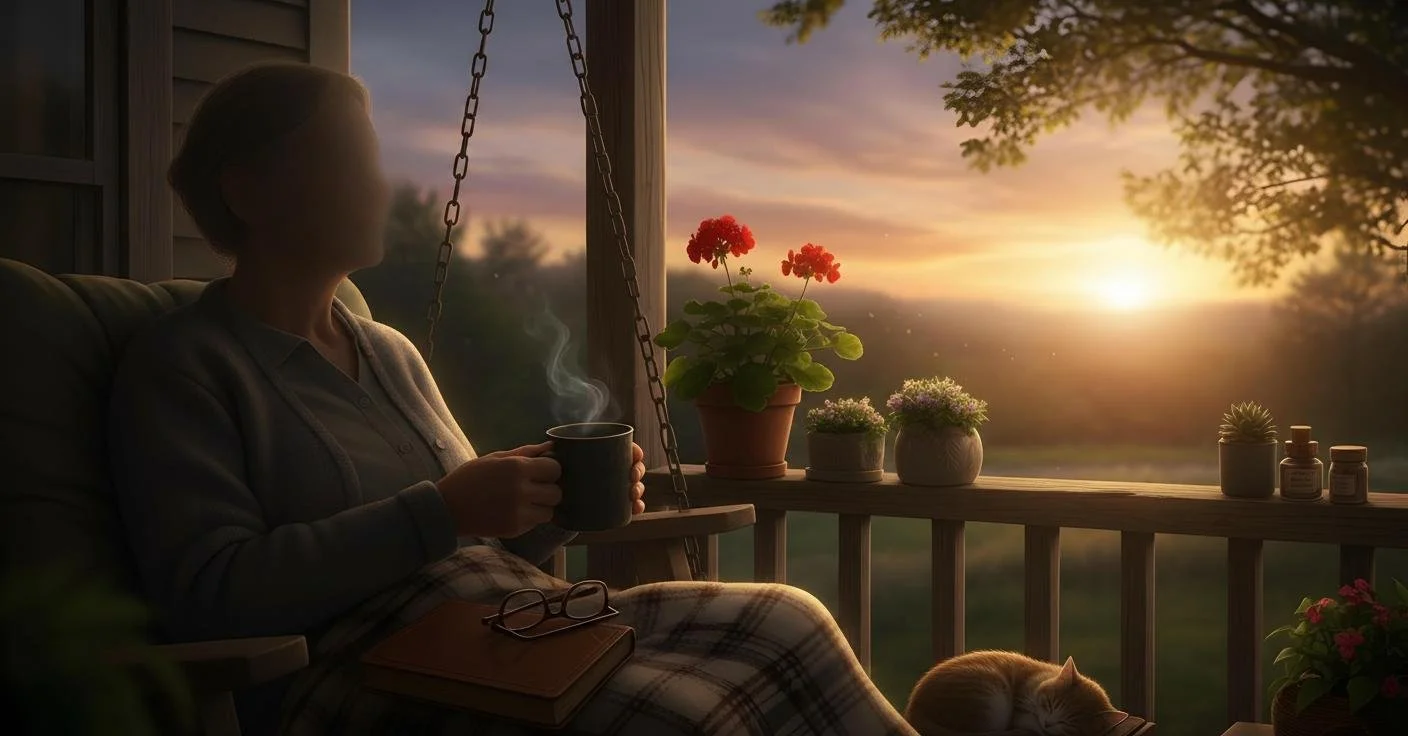
Category: Theme — Volume 6 (Peace) · 5 min read
Not the absence of difficulty. Not the resolution of every hard thing. Something anchored beneath the surface that holds even when the surface doesn't.
Start with your body for a moment.
Your shoulders — are they up near your ears right now? Your jaw — is it tight? The breath you're breathing — is it shallow and high in your chest, or is it deep and low and slow?
Most of us, if we're honest, are carrying tension we stopped noticing a long time ago. Not because it left. Because it became normal. The clenched jaw became the way the jaw is. The braced shoulders became the shape of the shoulders. The shallow breath became the only breath we know.
You have been bracing for years.
Bracing for the next problem. The next phone call. The next thing that needs handling before anyone else notices it's broken. Somewhere along the way, your body learned to stay ready — and then it forgot how to stand down.
This is the part nobody tells you about peace: it is not, first, a thought. It is physical.
When real peace finally arrives, you feel it in your body before you understand it in your mind. The shoulders drop. The breath goes deeper without you telling it to. The jaw lets go. Something in the chest that has been holding on quietly lets itself down.
And here is the strange thing — the thing that catches so many of us off guard.
A body that has been braced for years often doesn't trust peace when it comes.
It feels unfamiliar. Almost unsafe. Like you've let your guard down and something bad is about to happen the moment you relax. So you tense again. You pull the shoulders back up. You return to the bracing, because the bracing, at least, is familiar — and you have done this a thousand times without realizing you were doing it.
This is why peace cannot be willed into being. You cannot think your way into a settled body. You cannot decide to relax a nervous system that has spent years learning to stay ready. The body relearns peace the same slow way it learned tension — through repetition, through safety, through being shown over and over that it is finally allowed to stand down.
Which brings me to a word worth sitting with.
The word we translate "peace" — in Hebrew, shalom — does not mean quite what we've been taught it means. We hear "peace" and we think quiet. Calm. Nothing currently on fire. The absence of conflict.
But shalom means something far fuller. It means wholeness. Completeness. Every part of you in right order — nothing missing, nothing broken, nothing out of joint. Shalom is not the silence after the storm. It is a wholeness underneath that the storm cannot reach.
That changes everything about what we're actually looking for.
Because if peace is the absence of difficulty, then most of us will wait our whole lives and never find it — the difficulty does not stop coming. But if peace is a wholeness underneath the difficulty, then it is available right now, in the middle of the unresolved thing, in a body that is still partly braced.
Paul writes about a peace that "surpasses all understanding" — and notice what he says it does. It doesn't make sense of your circumstances. It doesn't resolve them. It guards your heart while your circumstances still don't make sense (Philippians 4:7). The word he uses is a soldier's word — to stand watch, to garrison. A peace posted at the door of your heart, holding the line, whether or not the surface has settled.
That is the peace anchored beneath the surface. Not the peace that waits for everything to be okay. The peace that holds you while everything is not.
Isaiah names it too — "perfect peace" for the one whose mind is stayed on God (Isaiah 26:3). In Hebrew that phrase is two words: shalom, shalom. The word doubled. Not peace once, but peace upon peace — wholeness so complete the language has to say it twice.
So how does a peace like that reach a body that has forgotten how to receive it?
Slowly. Gently. The way you would calm a frightened animal — never by force, only by patient, repeated safety.
You let your shoulders drop, and you notice nothing bad happens. You take one deep breath on purpose. You sit on the porch for five minutes and let your body make the discovery your mind already knows: that you can stop bracing and the world does not end. You let yourself be shown, again and again, that there is a wholeness underneath you that does not depend on you holding everything together.
It won't come all at once. The body relearns at the body's pace, not yours. But it does come — one unclenched moment at a time.
And one day you will notice your shoulders are down, and your breath is low and slow, and you did not make it happen. It happened to you. The way real peace always does.
Volume Six of the Direction Series is titled Rooted in Peace: Living Anchored in Christ. If this sat with you, you can begin at directionseries.com.
The Porchlight is on. 🔆
© 2025 Wylette P. Tillman | Polaris Press LLC.
The Loneliness of Being Needed
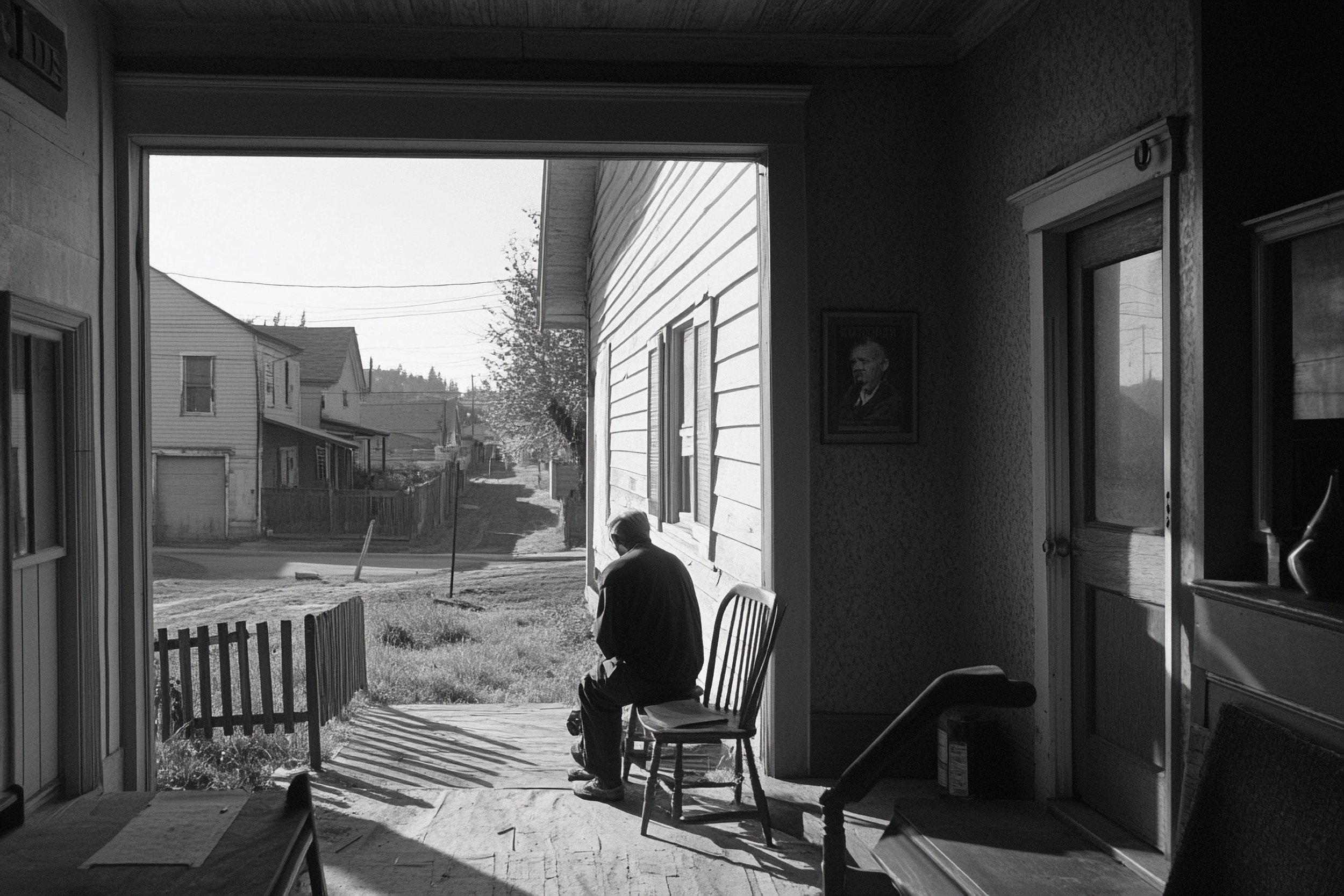
There is a particular loneliness that lives inside a full house — where everyone needs something from you, and no one has thought to ask how you are.
Category: Reflection · 3 min read
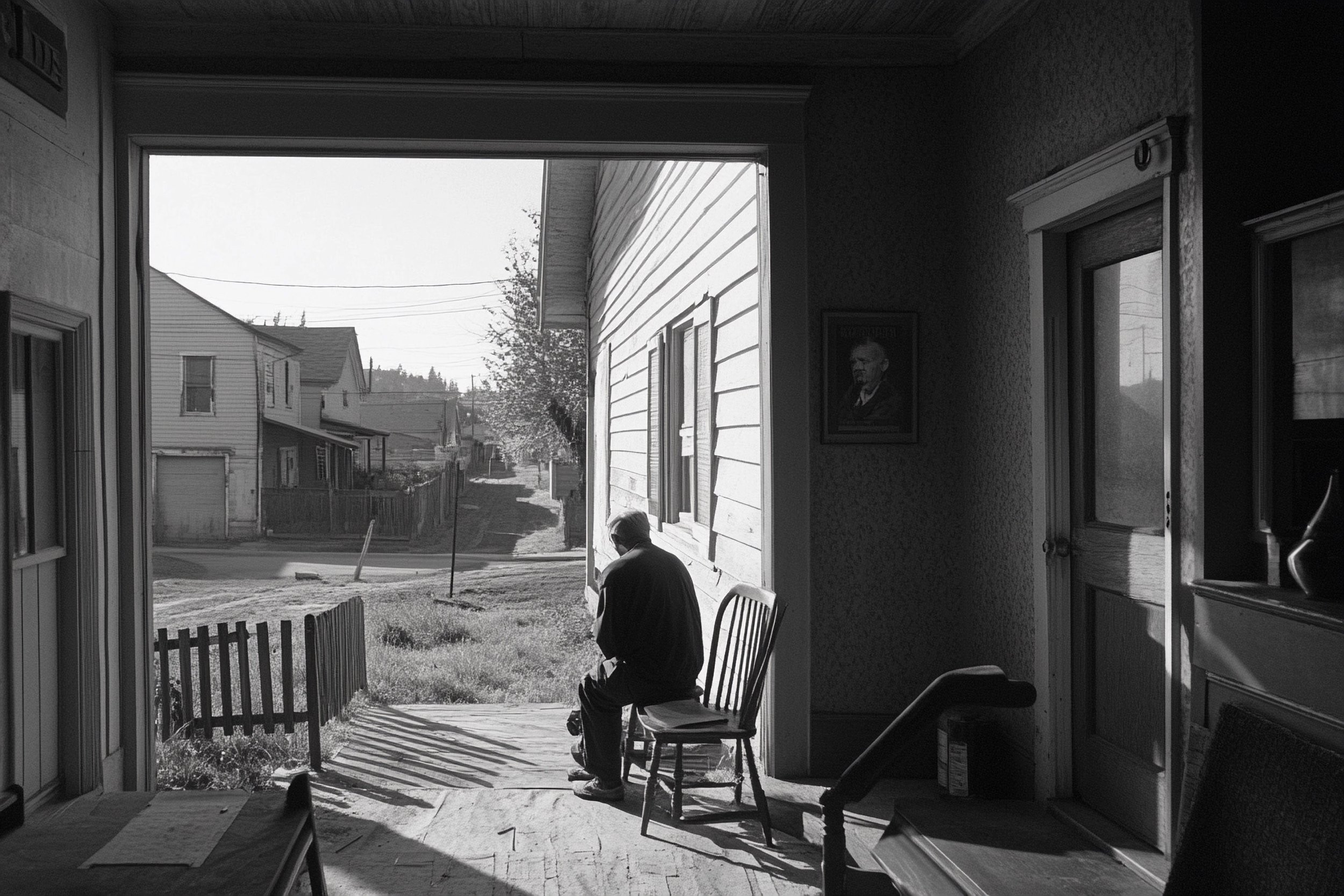
There is a particular loneliness that lives inside a full house — where everyone needs something from you, and no one has thought to ask how you are.
It's a strange loneliness, because on paper you are never alone. There are people everywhere. People calling your name, needing a ride, needing a decision, needing you to be steady, needing dinner, needing you to handle the thing nobody else will handle. You are wanted, constantly. And still, underneath all of it, there's an ache you can't quite explain.
Here is the explanation, and it took me a long time to find it: being needed is not the same as being known.
The people in your house love you. That's real. But much of the time, they relate to you through what you provide — the steady one, the fixer, the provider, the one who has it together. Their need is genuine, and it's even a kind of love. But it points at your function. It doesn't always reach the person underneath it.
And you can be surrounded by need and starved for being known. You can be the most necessary person in the room and the least seen.
There's a fear that lives under this, if we're honest enough to name it. Somewhere along the way you started to suspect that you're wanted for what you do — and that if you stopped being useful, you might stop being wanted at all. So you keep being useful. You keep meeting the need. And the loneliness doesn't lift, because you're trying to satisfy a hunger to be known by being more and more needed. Those are two different hungers, and one will never fill the other.
Being needed isn't the problem. It's part of love, part of a life that matters, part of being someone others can lean on. Don't hear this as permission to stop showing up.
But you also need to be known — and that you will not find by being more useful.
You'll find it in the small places where you're not the provider. A friend who wants nothing from you. A conversation where, for once, you're the one being asked how you're holding up. And you'll find it in the strangest place of all: with the one Person in the universe who does not need you.
There's a line in Acts where Paul says God is not served by human hands, as if He needed anything (Acts 17:24–25). Sit with that. The God of everything does not need you to do a single thing for Him. Which means His love for you is the one love that was never transactional. He isn't relating to you through your usefulness. He knew you and wanted you before you were useful to anyone — O Lord, you have searched me and known me (Psalm 139:1) — and He would want you still if you could do nothing at all.
You are needed by many. You are known by Him.
That is not the same thing. And it might be the very thing you've been starving for.
If something here resonated with you, The Direction Series was written for exactly where you are. I would love to invite you in — you can find it at directionseries.com.
The Porchlight is on. 🔆
© 2025 Wylette P. Tillman | Polaris Press LLC.

On Seeing Clearly
Spiritual vision doesn't blur all at once. It drifts slowly, quietly, without announcement. This is about how we find our way back.
Category: Theme · 4 min read

Spiritual vision doesn't blur all at once. It drifts slowly, quietly, without announcement. This is about how we find our way back.
Here is the strange thing about losing clarity: you almost never notice it happening. Blindness, if it came suddenly, you would notice — you'd panic, you'd seek help. But this isn't that. This is the slow filming-over of sight, the kind that happens so gradually you simply adjust, and squint, and call the dimmer version normal.
It happens with the people closest to you. There was a time you saw your spouse, your child, your friend as they actually were. And then, somewhere along the way, you started seeing your assumptions about them instead — the version built from old arguments and disappointments and the story you've told yourself so many times it hardened into fact. They changed, and you kept seeing the old picture. That's not malice. It's drift.
It happens with God. You started with something alive, and over the years it quietly calcified into a set of expectations — a God shaped less by who He is than by who your father was, or what that church taught you, or what you concluded the year the prayer went unanswered. You stopped relating to God and started relating to a composite you assembled from old wounds and never updated.
And it happens with yourself. You lost the ability to see yourself accurately somewhere back there, and now you either think less of yourself than is true or more, and either way the focus is off.
The reason none of this gets noticed is simple, and a little cruel: the same fog that blurs the sight also blurs your ability to notice the blur. You can't see that you can't see. It's like a prescription that slowly goes out of date — you don't wake up one morning unable to read the signs. You squint a little more each month, lean in a little closer, call it fine, until the day someone hands you the right lenses and you realize how much you'd been missing.
There's a story in Mark's gospel I keep coming back to (Mark 8:22–26). They bring a blind man to Jesus, and He heals him — but not all at once. He touches him and asks what he sees, and the man says something haunting: he sees people, but they look like trees walking around. Real sight, but partial. Shapes without clarity. So Jesus touches him a second time, and then he sees everything clearly.
I love that He didn't rebuke the half-sight. He didn't say that should have worked the first time. He simply touched him again.
Most of us are somewhere in the "trees walking" stage, if we're honest. We can see that something is there — shapes, outlines, a general sense. But the clarity is partial, and we've mistaken partial sight for full sight for so long that we stopped asking for the second touch.
So how do we find our way back?
Not by squinting harder. That's the first instinct, and it's the wrong one. You cannot force clarity through effort any more than you can force your eyes to adjust to a dark room by staring into it. You adjust by staying still long enough for your eyes to do what they were made to do.
Clarity comes back the same way. You get still. You stop adding more input to an already-overloaded field of vision. You quiet the noise that's been filming everything over. And you tell the truth — I think I've gone blurry. I don't think I'm seeing this clearly anymore — which is one of the most clarifying sentences a person can say, because naming the blur is where the focus begins to return.
And then you let yourself be touched a second time. You stop pretending the half-sight is the whole picture. You ask, the way the blind man's friends asked on his behalf, for something you cannot give yourself.
You don't have to see everything today. Trees walking is not failure. It's the first touch. It means sight is already returning.
Stay near the One who touches eyes a second time. The clarity you're missing is not gone. It's only waiting for you to be still enough to receive it.
Volume Five of the Direction Series is called Seeing Clearly: A Journey from Blur to Focus. If this resonated with you, you can begin at directionseries.com.
The Porchlight is on. 🔆
© 2025 Wylette P. Tillman | Polaris Press LLC.

You Are Allowed To Rest
Not when everything is done. Not when everyone is okay. Now. As an act of trust, not as a reward for finishing.
Category: Moment · 1 min read

Not when everything is done.
Not when everyone is okay.
Now.
As an act of trust, not as a reward for finishing.
You've been treating rest like a wage — something you'll collect once you've earned it, once the list is clear, once the people who depend on you are finally settled. But the list is never clear.
The people are never done needing you.
By that math, you will never rest, because the conditions you've set will never arrive.
So here is the quiet permission you may have been waiting for: you can stop now. Not because the work is finished.
Because you were never meant to carry it without ever setting it down.
There's a line in the Psalms that undoes me a little every time: he gives to his beloved sleep (Psalm 127:2). It comes right after a verse about rising early, staying up late, and eating the bread of anxious toil — as if to say, all that striving you were sure was required?
Rest was the gift the whole time.
Set it down. Just for tonight.
You are allowed.
If something here resonated with you, The Direction Series was written for exactly where you are. I would love to invite you in — you can find it at directionseries.com.
The Porchlight is on. 🔆
© 2025 Wylette P. Tillman | Polaris Press LLC.

When Did Faith Start Feeling Like Work?
Not a rhetorical question. A real one. Because there was probably a moment — and naming it matters.
Category: Question · 3 min read

Not a rhetorical question. A real one.
Because there was probably a moment — and naming it matters.
Faith didn't always feel like this. You can sense that much, even if you can't say when it changed. There was a time it felt like rest. Like being held. Like something done for you, not something you were responsible for keeping alive.
And now it feels like effort. One more thing on the list. A relationship you're maintaining mostly out of duty, hoping the feeling comes back if you just keep showing up.
So when did that happen?
Most people can't answer right away, because it almost never happens all at once. Faith rarely collapses. It erodes. The shift is so gradual that one day you look up and the thing that used to carry you has quietly become something you carry.
But if you sit with the question — really sit with it — a moment usually surfaces. Or a season.
For some it was a prayer that went unanswered, and something in you decided, without announcing it, to stop expecting much. For some it was a loss that faith didn't prevent. For some it was the people — a church, a leader, a community that wounded you in the name of the very thing you believed, and you kept the belief but lost the trust. For some it was simply the season you became responsible for everyone, and faith got folded into the pile of things you were now in charge of managing.
That's usually where it turns. The moment faith stopped being something you received and became something you administer.
Here's why naming it matters.
Unnamed, the heaviness feels like a verdict on you. Like you're failing at something everyone else finds easy. Like the work-ness of it is proof that your faith is thin, or fading, or fake.
Named, it becomes a story with a cause. It got heavy around the time my father died. It started when that church fell apart. It changed when I became the one holding everyone together and ran out of room to be held myself. A cause is something you can bring honesty to. A verdict just sits on you. A cause can be tended.
The early believers had the same drift. Writing to a young church in Galatia, Paul asked it straight out: you began in the Spirit — are you now trying to finish by your own effort? (It's in Galatians 3:3, if you'd like to sit with it.) The pull to turn a gift back into a job is old. It is not a sign you are uniquely broken. You don't have to fix it today. You don't even have to know what to do with the answer.
You just have to be honest enough to ask the question and let a moment surface.
When did faith start feeling like work?
Sit with it. The naming is where the weight begins to loosen.
If something here resonated with you, The Direction Series was written for exactly where you are. I would love to invite you in — you can find it at directionseries.com.
The Porchlight is on. 🔆
© 2025 Wylette P. Tillman | Polaris Press LLC.

What I Would Tell Someone Who Just Became the Head of This House
Nobody gives you a manual. Nobody tells you the weight, or the loneliness, or the specific grace that grows in you because of it.
Category: Reflection · 3 min read

Nobody gives you a manual. Nobody tells you the weight, or the loneliness, or the specific grace that grows in you because of it.
It happens in different ways. Sometimes it's a wedding, or a baby, or a mortgage with your name on it. Sometimes it's a death, and the family quietly turns and looks at you, and you understand without anyone saying it that you are the one now. Sometimes it's slower — a gradual realization that the buck stops with you, that there's no one above you to call, that you became the adult in the room while you weren't looking.
However it came, here is what I would tell you if we could sit on the porch for a few minutes before you walked back into it.
There are two chairs on this porch. One of them is mine. The other one is yours — and I'll be honest, sitting across from you, I'm half talking to the version of me who sat right where you're sitting once, with no idea what was coming.
First: the weight is real, and you didn't imagine it. You're going to carry things no one can see — decisions, worries, the mental list that runs at 2 a.m. People will see the calm you keep on the outside and assume the inside matches. It won't, not always, and that gap is not a character flaw. It's the cost of the job. Naming it to yourself is not weakness. It's the beginning of carrying it honestly.
Second: it will be lonely in a particular way. Not the loneliness of being alone — you'll rarely be alone. The loneliness of being the one everyone leans on, in a house full of people who need you and don't always think to ask how you're holding up. That loneliness is normal. It is not a sign you've done something wrong. But it is a sign you were never meant to carry this sealed off from everyone, including God.
Third — and this is the one I most wish someone had told me: you cannot fix everything, and you were never supposed to. You will run into the edge of what your effort can do. A person you can't reach. An outcome you can't bend. The day you discover that edge will feel like failure. It isn't. It's the day you learn the difference between carrying your house and trying to be God for it. The first is your job. The second was never on the list.
And then there's the part nobody warns you about, because it sounds too strange to say out loud: something grows in you because of this. Not in spite of it. Because of it.
The weight makes a kind of depth. The responsibility grows a steadiness you didn't have before. The seasons you would never have chosen turn out to be the ones that form you. There is a grace that does not show up when everything is easy — it shows up precisely in the place you feel least adequate. That's nearly word for word what Paul was told when he begged for relief and didn't get it: my grace is sufficient for you, for my power is made perfect in weakness (2 Corinthians 12:9). And it tends to arrive about the size of the day — the way the manna came in the wilderness, enough for the morning and never a day's worth to hoard (Exodus 16). No sooner, and no larger.
You will not feel ready. Nobody who ever carried a house well felt ready. Ready is not the requirement. Showing up is.
So show up. Carry what's yours. Set down what isn't. And on the nights it's heavy, remember that the porch light is on, and you were never meant to hold it alone.
If something here resonated with you, The Direction Series was written for exactly where you are. I would love to invite you in — you can find it at directionseries.com.
The Porchlight is on. 🔆
© 2025 Wylette P. Tillman | Polaris Press LLC.

The Difference Between Waiting and Wasting
Waiting feels like doing nothing. It rarely is. This is about the formation that happens in the seasons we mistake for standstill.
Category: Theme · 4 min read

Waiting feels like doing nothing.
It rarely is.
This is about the formation that happens in the seasons we mistake for standstill.
You know the kind of season I mean. The job that won't change no matter how hard you work it. The prayer you've prayed so long it's worn smooth. The child you can't reach. The marriage that is neither healing nor ending. The result you're still waiting on. The sense that everyone else's life is moving and yours is parked at a light that won't turn green.
From the outside, nothing is happening. And from the inside, it feels like you're losing time you'll never get back.
We've been trained to hate that feeling. The world measures a life by what's visibly moving — output, progress, milestones you can point to. By that math, waiting is failure. Dead time. A gap to apologize for. So when a season slows down, we assume we've done something wrong, or that God has gone quiet, or that we're simply being left behind.
But there is a difference between waiting and wasting, and almost everything depends on which one you're actually doing.
Here's the strange part: from the outside, they look identical. Two people can sit in the very same stalled season — same closed door, same silence — and one is wasting it while the other is being formed by it. The circumstance doesn't tell you which is which. The posture inside it does.
There's a Hebrew word for the kind of waiting Scripture keeps asking of us — qavah. It doesn't mean idling. Those who've studied it often tie it to the picture of a cord pulled taut — strands twisted together into something stronger than any one of them was alone. Waiting, in that sense, isn't slack time. It's tension that is making you stronger while you can't feel it happening.
That's the whole distinction. Wasting is slack — checking out, numbing the discomfort, gritting your teeth until the season ends so your real life can resume. Waiting is tension held with hope — staying present in the very place you'd rather skip, trusting that something is being done in you even though nothing is being done around you.
Scripture is full of people stuck in seasons that looked like wasted time and weren't. The long years between a promise and its keeping. The stretches in prisons and wildernesses and back fields where the people God would later use were being quietly made ready. None of them could see the work while they were inside it. They felt forgotten. They were being formed.
It helps to remember how growth actually works underground. A seed in winter looks like nothing — like a thing that died and got buried. But the dormant season is when the roots go deep enough to hold the weight of everything that comes later. Rush that season, and the plant can't carry its own fruit. The waiting wasn't the obstacle to the growth. The waiting was the growth.
So if you're in one of those seasons right now — and if you're the one everyone leans on, you probably are, because the stalled places are where the strong get tested — hear this carefully. You are not behind. You are not failing. You are not wasting the time.
You may simply be in the part of the story that doesn't photograph well. The roots. The taut cord. The quiet, unglamorous, invisible work of being made ready for something you can't see yet.
You don't have to enjoy the season to stop despising it. You only have to stay — present, honest, hoping — instead of checking out until it passes.
That's the difference. And it's the whole difference.
Volume Four of the Direction Series is called Waiting. If this sat with you, you can begin at directionseries.com.
The Porchlight is on. 🔆
© 2025 Wylette P. Tillman | Polaris Press LLC.

On Hiding Your Tears
You've done it. Gathered yourself in the car. Taken a breath before walking back into the room. This post doesn't ask you to stop. It asks what it costs.
Category: Reflection · 3 min read

You've done it.
Gathered yourself in the car. Taken a breath before walking back into the room. Stood in the bathroom a little longer than necessary so no one would see your face before you were ready.
This post doesn't ask you to stop.
It asks what it costs.
You know the routine without having to think about it. The drive home, or the bathroom, or the thirty seconds in the garage with the engine off. Whatever it took — you pulled it back together. Wiped your face. Steadied your voice. Found the expression that says everything is handled.
And then you opened the door and walked back into the lives of the people who need you to be okay.
Nobody taught you to do this. You learned it the way you learn most things that matter — by needing to.
There is a kind of strength in it.
You don't fall apart in front of your kids. You don't make your own hard day everyone else's to carry.
That restraint is real, and it is a form of love.
This post is not here to take it from you.
But strength that no one ever sees has a cost, and you've been paying it quietly for a long time.
The cost is this: somewhere along the way, hiding became so automatic that you stopped noticing you were doing it. The composing happens before you've even registered the feeling. And a person can go years like that — fluent in holding it together, a stranger to being held.
Here is the thing I want to sit with you about. Hiding your tears from the people who depend on you may be wisdom. Hiding them from God was never required.
David too found himself at such a place of reckoning — we find him there in Psalm 56.
David is not writing from the polished side of victory. He is afraid. Pressed. Watched. Misunderstood. Surrounded by people who seem determined to twist his words and track his steps. This is not the heroic image of David we often remember. This is David in a vulnerable place, trying to tell the truth about what fear feels like.
And in the middle of that fear, he says something tender and almost startling: his tears are not unnoticed by God.
They are counted.
They are kept.
They matter.
It is a strange and tender picture. The God of the universe bent close enough to count what runs down David’s face — the same is true of the fear, terror, and tears you reserve for those dark spaces.
You don't have to gather yourself for that. There is no version of you that is too much, too tired, or too undone to be in the room. The face you compose for everyone else — you can set it down here.
Nobody is waiting for you to be okay first.
You don't have to do anything with that right now. Just notice the option is there.
The car can wait.
The breath can wait.
You're allowed to be seen before you've fixed your face.
If this reflection met you somewhere familiar, The Direction Series was written for that kind of place — the quiet interior places where strength, surrender, and healing begin to meet. You are welcome to explore more at directionseries.com.
The Porchlight is on. 🔆
© 2025 Wylette P. Tillman | Polaris Press LLC.

The Work Happening Beneath the Surface
You cannot always see what God is doing. That has never meant He isn't doing it. This is about learning to trust the invisible work.
Category: Theme — Volume 3 (Discernment) · 5 min read

You cannot always see what God is doing. That has never meant He isn't doing it. This is about learning to trust the invisible work.
A tree does not look like it is working.
For most of the year, if you watched an oak, you would see nothing happening. No visible growth. No measurable change. It stands there, as it did last week, as it did last year. If your evaluation of the tree's aliveness depended on what you could see from above the ground, you would eventually conclude that the tree had stopped living.
But the tree is working. Constantly. Underneath the ground, in a vast system of roots you will never see, the tree is searching for water, storing minerals, forming relationships with the fungi that feed it. It is drawing nutrients from soil you cannot examine and building structures that will only become visible years from now when a new branch pushes out in a direction no one predicted.
Ninety percent of the tree's life is happening where no one can see it.
And I want to suggest, carefully, that the same is true of you.
Most of what God is doing in your life is happening beneath the surface.
You have been trained to measure your spiritual life by what you can see — the prayers answered, the feelings of closeness, the moments when you knew something shifted. Those are real. They matter. But they are the branches, not the roots. They are a small fraction of the actual work.
The actual work is quieter.
It is the patience forming in you that you will not notice until the day someone cuts you off in traffic and you simply do not have the energy to be angry — and then you realize, a week later, that you used to have that energy, and somewhere along the way it got replaced with something else.
It is the grief being processed while you are doing the dishes. Not the dramatic grief of the first months. The slower grief. The grief that shows up in waves you did not schedule, that moves through your body while you are folding laundry, that is quietly rearranging what your life means in ways you will only understand years from now.
It is the decision maturing inside you about something you have not yet named. You do not know you are making it. You think you are simply living your days. But something in you is sorting, considering, coming to a knowing that has not yet surfaced in language. When it does — when you finally say the thing out loud — it will feel sudden to everyone around you. It will not have been sudden. It will have been the harvest of work you did not know was happening.
It is the slow softening of something that used to be hard in you. A grudge that is losing its grip. A fear that is losing its hold. A certainty that is becoming a question. You did not work to make any of this happen. It is happening anyway. Because something is at work in you that is not you.
I want to say something carefully here, because I think it is the honest heart of this.
You cannot rush this work. You cannot speed it up. You cannot prove it is happening on any timeline you would like it to happen on.
And you cannot tell, most days, whether it is happening at all.
This is the hardest part. Because most of us have been shaped by a culture that measures progress by what is visible. We want to see evidence. We want to know we are moving forward. We want milestones, markers, some confirmation that our lives are not simply drifting through time.
But the deepest spiritual work refuses those terms. It works on a timeline that is not ours. It works in a medium we cannot examine. It is completely real, and completely invisible, and completely outside our ability to verify.
The roots do not ask the tree for a status report. They are just doing their work.
Here is what I want to offer, and I will be honest: it is harder than it sounds.
Stop demanding visible evidence of God's work in your life.
Not because evidence is bad, and not because the times when you could see Him working were somehow lesser. But because the habit of demanding evidence is quietly stealing from you the capacity to trust when evidence is not available. And the real seasons of formation — the ones that shape you most deeply — are usually the ones without evidence.
You cannot live a mature spiritual life if every season has to be one where you can see God working. You will burn yourself out chasing a feeling. You will start measuring your faith by the intensity of your experiences rather than the faithfulness of your staying. You will mistake the absence of fireworks for the absence of fire.
There is fire. It is burning low and slow and deep. It is doing what fire does when it is not being watched — converting one thing into another thing, permanently, over a long period of time, without any need for an audience.
The work God is doing in you right now is real. You cannot see most of it. You will not see most of it for years. Some of it you will never see in this lifetime.
Trust it anyway.
Not because it is easy to trust. Because the alternative — demanding proof you cannot have — will exhaust you and teach you nothing.
The roots are growing. The tree will grow a branch you cannot yet imagine, in a direction no one predicted, at a time you did not schedule.
Your only job is to keep standing there.
If something here resonated with you, The Direction Series was written for exactly where you are. I would love to invite you in — you can find it at directionseries.com.
The Porchlight is on. 🔆
© 2025 Wylette P. Tillman | Polaris Press LLC

When God Feels Absent
Not a crisis of belief. Something quieter. The sense that the line went silent without announcement and you're not sure when it happened.
Category: Question · 5 min read

Not a crisis of belief. Something quieter. The sense that the line went silent without announcement and you're not sure when it happened.
You still pray. The words come out of you the way they always have. But something is different now. The warmth is gone. The sense of being heard. The small confirmations that used to come so easily — a Scripture that felt personal, a song that seemed written for you, the quiet knowing in your chest that you were not alone.
It has been weeks, maybe months, maybe longer. You have not said this out loud to anyone. You are not sure what you would even say.
So you keep showing up. Keep opening the Bible. Keep going through the motions of faith you have practiced for years. And underneath it all is the quiet question you do not want to ask.
Where did He go.
I want to sit with this carefully, because I think it is one of the most important and least-honored experiences in a life of faith.
Most of the answers you have been given are wrong. Not malicious — just wrong. They miss the actual texture of what you are living.
You have been told that if God feels distant, it is because you moved. You have been told to check your sin, your prayer life, your devotion, your consistency. You have been told that feelings are unreliable and you should simply trust the facts. You have been told that God is closer than you think, as if the problem were merely a perception glitch you could fix by trying harder.
None of those answers are quite true. And even when they contain fragments of truth, they treat the silence as a problem to be solved rather than a season to be honored.
I am not going to do that to you.
Here is what I can tell you honestly.
Sometimes God feels absent. The experience is real. The Scriptures do not hide this. The Psalms are full of people crying out into what feels like empty sky. My God, my God, why have you forsaken me. That was Jesus. Those words came out of the mouth of the Son of God Himself. If the felt absence of God was not a real human experience, Jesus would not have spoken those words.
The saints throughout history have lived long stretches inside this silence. Mother Teresa, for most of her ministry, did not feel God's presence. John of the Cross called it the dark night of the soul. Teresa of Ávila wrote of years of what she called dryness. These are not people with shallow faith. These are some of the most formed Christians in history, and they spent years of their lives inside the silence you are inside now.
You are in good company. Company that nobody told you about.
What I cannot tell you is why.
I do not know why the silence comes when it comes. I do not know why some seasons of life are saturated with a sense of God's presence and other seasons are not. I have my suspicions — that the silence protects us from building our faith on feelings that can be manufactured, that formation sometimes requires a kind of spiritual weaning, that love matured is love that stays even when the feeling leaves. But these are my suspicions, not my certainties.
And I want to be careful not to hand you a theological explanation for something that may not have one you can hold in this season.
What I can tell you is what I have come to believe about what faith is, when it is honest.
Faith is not the presence of a feeling. Faith is what you do when the feeling has left and you stay anyway.
That is not a lesser faith. That is the deeper one. The faith you had when everything felt close and warm was real. But it was a faith you had not yet been asked to carry on your own. The faith being formed in you right now, inside the silence, is a faith that does not depend on what you can feel. It depends on what you know to be true even when you cannot feel it.
That kind of faith takes a long time to grow. It cannot be rushed. And it cannot be grown in sunlight alone.
So here is what I want to say, carefully, without pretending to have the answer you came here hoping for.
Stay in the room.
Do not leave the practices just because the warmth has left. Do not stop praying just because the words feel like they fall into empty space. Do not stop reading just because the Scripture has stopped lighting up at you. Do not stop showing up just because the showing up feels like performance.
Because here is the strange thing. The people who have walked this road before you — the saints, the psalmists, Jesus Himself — they did not leave the room. They stayed, and they kept speaking into the silence, and they lived long enough to discover that the silence was not empty. It was pregnant with something they could not yet recognize.
The silence is doing something in you that the warmth could not do. It is teaching you to trust a God you cannot feel. That is not a small thing. That is one of the most sacred and difficult forms of formation available to a human being.
You are not being abandoned. You are being taught.
Stay.
If something here resonated with you, The Direction Series was written for exactly where you are. I would love to invite you in — you can find it at directionseries.com.
The Porchlight is on. 🔆
© 2025 Wylette P. Tillman | Polaris Press LLC

Today's Only Assignment
Not the week. Not the year. Not the decision you need to make by Friday. Just today. One breath at a time.
Category: Moment · 2 min read
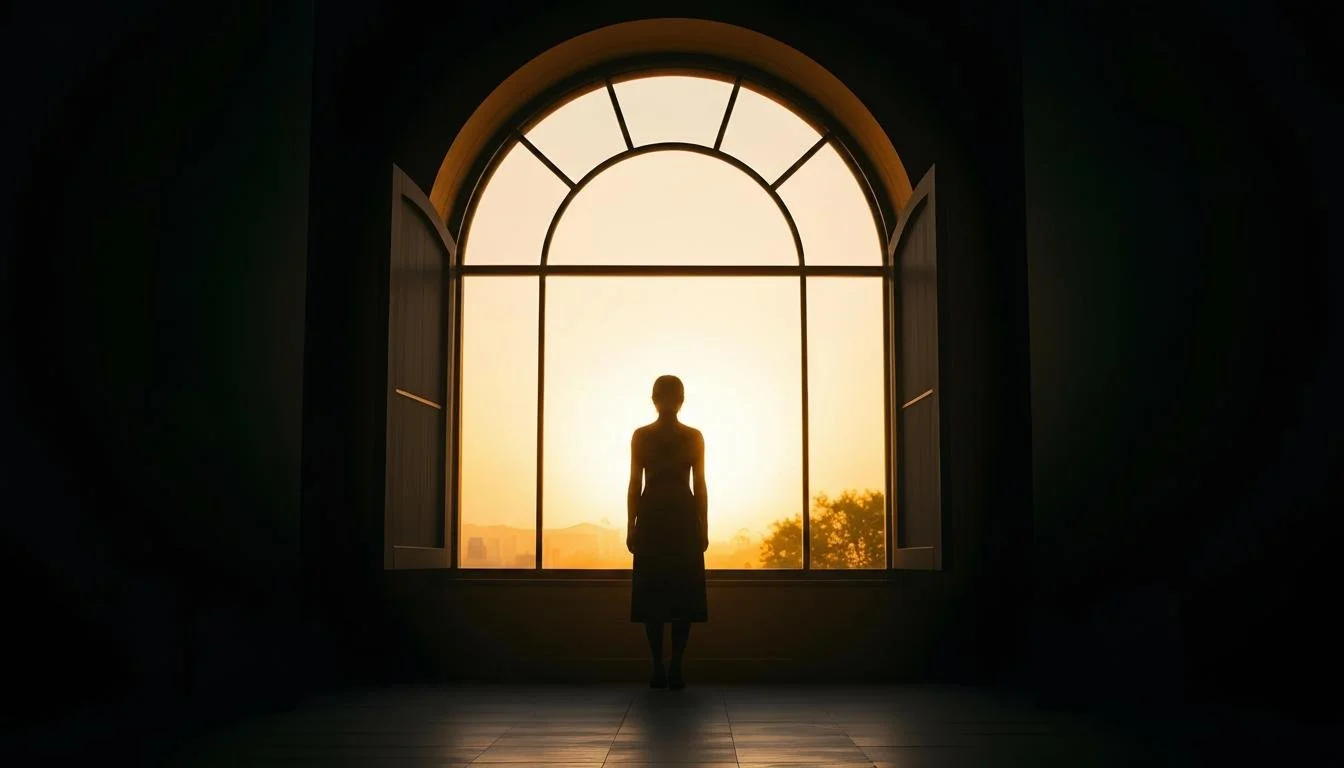
Not the week. Not the year. Not the decision you need to make by Friday.
Just today. One breath at a time.
The list waiting for you is long. You know the list. You rehearsed it at two in the morning. You opened your eyes already tired from carrying tomorrow before today has even started.
I want to give you something small, because small is what you have room for.
Today is the only assignment. Not the week ahead. Not the problem that has been unsolved for months. Not the conversation you do not yet have the words for. Not the future you are trying to secure for the people you love.
Just today. Just this hour. Just the next right thing, and then the one after that.
You are allowed to stop carrying tomorrow. Tomorrow will still be there when you arrive. It does not need you to rehearse it tonight.
What can you do today — only today — that is actually yours to do?
Start there. Finish there. Rest in between.
The long work of your life will still be waiting for you in the morning. And the God who has been walking with you through the long work is not asking you to complete it tonight.
He is asking you to stay present, today, to what is actually in front of you.
That is enough. That has always been enough.
If something here resonated with you, The Direction Series was written for exactly where you are. I would love to invite you in — you can find it at directionseries.com.
The Porchlight is on. 🔆
© 2025 Wylette P. Tillman | Polaris Press LLC

What You Can't Control — and What That Reveals
The list of things outside your control is longer than you want to admit. What you do with that list is one of the most spiritual decisions you will ever make.
Category: Reflection · 5 min read

The list of things outside your control is longer than you want to admit. What you do with that list is one of the most spiritual decisions you will ever make.
Let me say it plainly for a moment.
You cannot control whether your child makes the decision you think they should make. You cannot control your aging parent's memory, or the pace of its loss, or how your siblings handle it. You cannot control the election. You cannot control what your coworker says in a meeting, or what your boss decides about your role, or whether the company survives the year.
You cannot control the traffic on your morning commute. You cannot control your spouse's mood when they walk in the door. You cannot control whether your friend calls back. You cannot control what people think of you. You cannot control whether the diagnosis is what you hoped.
You cannot control the weather. You cannot control the economy. You cannot control the news cycle that is shaping the childhood of the children you love. You cannot control who gets sick and who recovers and who doesn't. You cannot control the timing of grief.
You can feel the weight of that list even reading it.
And I want you to notice something: you have been treating a great deal of that list as if it were yours to manage anyway.
This is where I want to slow down, because I think it is the honest heart of this post.
You know, intellectually, that those things are outside your control. You would say so if someone asked you. But your body has been operating as if they were yours to carry anyway. The lying awake at night rehearsing a conversation you have not yet had. The refreshing of the news. The mental energy spent on your adult child's decisions. The constant low-grade bracing for the next thing that might go wrong.
That is the cost of the illusion. And the cost is enormous.
It costs you sleep. It costs you presence with the people actually in the room. It costs you the ability to enjoy good things when they arrive, because you are already scanning the horizon for the next threat. It costs you joy, which cannot coexist with sustained vigilance. It costs you trust, which cannot grow in the soil of constant management.
And underneath all of that, quietly, it costs you your sense of God. Because a person who believes the world is theirs to hold has no room, functionally, for a God who is holding it. You may still say you believe. You may still mean it. But your nervous system has been operating on a different theology than your mouth has been confessing.
The gap between what you say you believe and what your body is doing at 2am — that gap is the real cost.
Here is what I want to offer, carefully.
The list is not your enemy. The list is your teacher.
Every item on the list of things you cannot control is, in a strange way, a small act of mercy. Because every one of them is a reminder that you were not designed to carry the world. You were designed to carry what is yours. That list is much shorter. It is usually the one right in front of you — the next conversation, the next decision, the next meal, the next breath.
You have been operating as if your list and God's list were the same list. They are not. And every time reality reminds you that they are not, it is not a punishment. It is a correction toward your actual size.
Your actual size is smaller than you have been acting. And smaller is not less. Smaller is freer.
Consider for a moment what it would mean to read that list again — the child, the parent, the election, the traffic, the mood — and let each item simply not be yours.
Not in a detached way. Not in a way that says you do not care. You care enormously. That is not the question. The question is whether your care is expressed through management or through trust.
Management says, I will carry this because if I don't, no one will.
Trust says, I will do what is actually mine to do, and I will release the rest to the One whose list it actually is.
Management is exhausting. Trust is restful — not because the situation is easier, but because you are no longer doing a job that was never yours.
The list is teaching you something. It has been teaching you for years.
It is teaching you the difference between your work and God's work. It is teaching you that the sense of control you have been grasping was never real — and that letting it go does not make the world more dangerous. The world was already that way. You were just pretending otherwise.
And it is teaching you, slowly, that the God you have been asking to help you manage is actually asking you to stop managing. Not to stop caring. To stop carrying what is not yours to carry.
That lesson will take a lifetime to learn. You will not graduate from it. Neither will I. But we can start today, with the list, and with the quiet decision to let each item be what it is.
Not mine. His.
And you — lighter, smaller, freer — finally allowed to do only your part.
If something here resonated with you, The Direction Series was written for exactly where you are. I would love to invite you in — you can find it at directionseries.com.
The Porchlight is on. 🔆
© 2025 Wylette P. Tillman | Polaris Press LLC

Wonder as a Spiritual Practice
When did you last feel small in a good way? Small in the way that makes the world feel larger and God feel closer?
Category: Theme — Volume 2 (Wonder)* 4 min read

When did you last feel small in a good way? Small in the way that makes the world feel larger and God feel closer?
Not small in the way you feel on a hard day, when the weight makes you feel invisible. A different kind of small. The kind that arrives when you are stopped — actually stopped, not just waiting — by something you did not expect to notice.
A child asks a question you have no answer for and you realize the question is better than any answer you could have given.
You look at your own hand, really look at it, and register for the first time in a long time that it works. That it has been working this whole time. That someone who was not you designed the way it closes around a cup.
The first light of morning comes through a window and lays itself across the floor in a shape you did not arrange and could not have arranged. It just arrives. It has been arriving your whole life.
You cut yourself and a week later the skin has closed. You did not manage this. You did not even think about it while it was happening. Something in you remembered how to heal without consulting you.
These are the moments I mean.
Most of us have been trained to think of wonder as something that happens to us on vacation. At the Grand Canyon. Under the Northern Lights. On some rare occasion set aside for awe, requiring travel, planning, and a view.
But wonder is not vacation. Wonder is already here. Wonder is the quality of attention we have mostly stopped paying to the ordinary.
The world does not require a new sky to be astonishing. It only requires us to look at the sky we have, for long enough, with something other than our usual hurry.
This is why wonder cannot be manufactured on demand. It is not a feeling you summon. It is a posture you recover.
I want to say something carefully now, because I think it is the heart of this.
Wonder, in the spiritual sense, is how we remember that we are not God.
We forget this constantly. Not because we are arrogant. Because we are responsible. The weight of adulthood trains us to act as if the world rests on our management of it. Our children. Our households. Our jobs. Our bodies. Our decisions. Our schedules. We carry so much that we start to believe — quietly, without meaning to — that we are the ones keeping things in motion.
And then something happens. A small thing. Light through a window. A hand that works. A child asking why.
And for a moment, we are reminded that there is a vast order beneath the one we manage. That something other than us is holding the whole of it together. That we did not make the light, and we are not making the light, and we are not required to make the light.
That reminder is not a demotion. It is a mercy.
The relief of wonder is the relief of setting down a weight we were never supposed to be carrying.
This is why the Scriptures are full of people falling to their knees. It is not performance. It is what happens in the body when wonder finally breaks through the managing. When you remember, in your knees and in your chest, that the God you have been talking to is larger than the boxes you have built for Him. When you remember that the world is not a problem you are solving. It is a gift you are living inside of.
The kneeling is the body telling the truth before the mouth catches up.
Here is the reframe I want to offer, and then I will stop.
Wonder is not the opposite of worship. Wonder is worship in its most honest form.
Worship is not something that happens only in a building on Sunday. Worship happens every time you stop managing long enough to notice that the world is held by someone other than you. Every time you look at the light on the floor and register that you are inside a gift you did not arrange.
You have been worshipping, quietly, without calling it that, every time wonder has stopped you in your tracks.
You are more practiced at this than you know.
The invitation this week is not to try to feel wonder. It is to stop suppressing the wonder that is already finding you.
It is finding you in your kitchen. In your car. In the face of someone you love. In your own body. In the quiet moments between the hurries.
You do not have to go anywhere to meet it. You only have to stop long enough to let it meet you.
If something here resonated with you, The Direction Series was written for exactly where you are. I would love to invite you in — you can find it at directionseries.com.
The Porchlight is on. 🔆
© 2025 Wylette P. Tillman | Polaris Press LLC