

The Porch
A quiet place to sit. You’re welcome here.
The Porch
A quiet place to pause. A space to be heard. A reminder that you don't have to carry everything alone.
These reflections are part of The Direction Series, but they're written for the in-between moments — when you need a breath, not an answer.
Make yourself at home.
The Porch exists to create a safe, hospitable space for reflection — where presence matters more than productivity, and people are reminded they are seen, heard, and not alone.

The Space Between Sunday and Monday
Something happens in that gap. The peace of Sunday morning meets the weight of Monday afternoon and one of them usually wins.
Category: Reflection * 4 min read

Something happens in that gap. The peace of Sunday morning meets the weight of Monday afternoon and one of them usually wins.
You know the shape of it.
Sunday morning you are gathered. You sing the songs. You mean the words. Something softens in you that had been tight all week. For a few hours you remember what your life is actually for. You leave the service lighter than you arrived.
And then the drive home begins.
Somewhere between the parking lot and your kitchen, the first piece of it starts slipping. Maybe it's a small thing — somebody's mood, a conversation that didn't go how you hoped, the quiet awareness of everything waiting for you at the house. The softness you felt an hour ago doesn't vanish exactly. It just gets harder to hold.
By Sunday evening you are already thinking about Monday. You are laying out clothes, making lunches, checking calendars. The week rises up toward you like a wave you have to be ready for. You sleep, but you do not rest.
Monday morning begins before you are awake. The alarm. The kids. The coffee that does less than it used to. The first email before you've even made it to your desk. By Monday afternoon, Sunday morning feels like something that happened to someone else.
That is the gap. That is the space between.
I want to be careful here because I have spent a lot of years listening to people try to close this gap with the wrong tools.
Some people try to close it by making Sunday do more. More worship, more study, more time at the service, more spiritual intensity. As if enough Sunday could inoculate against the coming Monday.
Some people try to close it by blaming themselves. They decide the gap is evidence of their shallow faith. They add guilt on top of exhaustion and call it conviction.
Some people try to close it by letting go of Sunday altogether. Not dramatically. Just slowly. They stop expecting Sunday to matter and stop being disappointed when it doesn't. They learn to treat the softness they used to feel as something they have outgrown.
None of these are working. I have watched them not work in my own life and in the lives of people I love.
Because the gap is not a flaw in your faith. The gap is the honest cost of living in a world that will not stop asking things of you.
Here is what I have started to believe.
The gap between Sunday and Monday is not evidence that you have failed spiritually. It is evidence that you have been given a real life to live. A household. A vocation. People who need you. A body that gets tired. Responsibilities that do not pause because you had a meaningful Sunday.
The people whose Sundays and Mondays feel identical are usually either very young, very sheltered, or very disconnected from the daily work of caring for others. Most of us do not have the luxury of that sameness. We live in the gap because the gap is where real life happens.
And this is the part nobody told me for a long time: God is not waiting for you on the other side of the gap, judging how quickly you cross it. God is already in the gap with you. The same presence you felt on Sunday morning is not gone on Monday afternoon. It is quieter. Harder to notice. But it is the same presence, and it is not going anywhere.
So here is what I want to offer, if you will take it.
You do not have to close the gap. You are allowed to live in it.
You are allowed to feel the softness of Sunday morning and the weight of Monday afternoon in the same body, in the same week, in the same life, without deciding one of them is fake. Both are real. Both belong to you. Both are held.
The peace you felt on Sunday is not a performance you failed to sustain. It was a preview. A small sample of something that is available, slowly, in bits and pieces, all week long — if you will look for it in the specific texture of Monday afternoon instead of demanding it show up the way it did on Sunday morning.
Monday afternoon peace looks different than Sunday morning peace. It is smaller. Less musical. It shows up in the breath you take before answering your child. In the three quiet seconds in the car before walking into the office. In the decision to be kind to someone who does not deserve it. In the moment you notice you are not alone, even though you thought you were.
That is not a lesser peace. That is peace that has learned how to live where you live.
The gap is not the problem. The gap is the classroom.
And you are already in it.
If something here resonated with you, The Direction Series was written for exactly where you are. I would love to invite you in — you can find it at directionseries.com.
The Porchlight is on. 🔆
© 2025 Wylette P. Tillman | Polaris Press LLC

Is God Disappointed in Me?
It's the question under the question. The one you don't say in church but think on the drive home.
Category: Question * 5 min read

It's the question under the question. The one you don't say in church but think on the drive home.
You don't ask it out loud because you already know what people would say. They would reassure you. They would quote a verse. They would mean well. And none of it would touch the actual place the question lives.
Because the question isn't really theological. It's intimate.
It's the question that rises up when you lose your temper at your child and catch yourself wondering if God saw it. When you skip church because you are too tired and then feel guilty for the reason, not the absence. When you haven't prayed in a while and don't know how to start again without acknowledging that you stopped. When you look at the gap between who you wanted to be by now and who you actually are, and you wonder who is keeping score.
That's the question. Not is God disappointed in me in some abstract theological sense. But am I the kind of person God shakes His head at when He thinks about me.
I want to sit with something carefully here.
The voice that tells you God is disappointed in you — whose voice is that, actually? Where did you first hear it?
For a lot of us, it did not come from God. It came from a parent whose approval had conditions. A church that measured spiritual maturity by performance. A season when we failed in a visible way and were made to feel the weight of it for years. A culture that trained us to believe that love must be earned and that slipping means starting over from zero.
Those voices installed themselves in our heads early, and we learned to speak to ourselves in their cadence. We learned to expect disappointment. We learned to brace for it. And eventually we projected that voice onto God, because that was the only voice we knew how to hear from an authority figure.
But that voice is not God. It is a recording.
And many of us have spent years listening to the recording and calling it prayer.
Here is what I have come to believe, slowly, over more years than I want to admit.
What God does with our failure is not what we fear He does with our failure.
We fear a tallying. A ledger. A quiet head-shake from a long distance away. We fear being seen at our worst and remembered for it. We fear that grace has a limit and that we have probably found it.
But every time Scripture shows us God responding to someone in their failure — not their theoretical failure, not their failure in parables, but their actual, specific, named failure — something else happens.
He goes toward them. Not away.
He feeds them. Asks them questions. Cooks breakfast on a beach for the man who denied Him three times. Meets the woman at the well who is on her sixth relationship and has a conversation with her that changes her life. Lets the one who betrayed Him kiss Him on the cheek without striking him dead.
That is not the behavior of a disappointed God. That is the behavior of a God who knew what you were before you knew it about yourself and came anyway.
This does not mean our failures don't matter. They matter. They shape us and they shape the people around us, and the real work of a spiritual life is the slow reckoning with what we have done and left undone.
But reckoning is not shame. And formation is not punishment.
The God who is actually there is not tapping His foot waiting for you to get your act together. He is not keeping a file. He is not counting the days since you last prayed with the same energy the enemy uses to count them.
He is closer than the voice in your head that says otherwise. He has been this whole time.
Why is it so hard for us to see ourselves the way our Father sees us?
We offer unconditional love to the people we love. Our children. Our parents. Our closest friends. We love them through the hard seasons, the mistakes, the repeated versions of the same mistake. We don't keep a ledger on them. We wouldn't know how to.
But somehow we cannot conceive that our Father — Abba — offers that same love to us.
Imagine this. You are sitting on your front porch and your phone rings. It's someone you love. A child. A sibling. A parent. Your closest friend. And they say, I need you. Can you come now.
Do you pause and replay every time they let you down? Every missed call, every hard word, every disappointment? Do you decide whether they have earned your response this time?
Of course you don't. You go.
But knowingly or not, those are the conditions we imagine our Father uses when we turn toward Him. We picture Him doing what we would never do to the people we love. We picture Him keeping score we would never keep. We picture Him hesitating when we are the ones who came running.
Your loved one is flawed. You are flawed. You still love them without qualification, and the love our Father extends is no smaller than the love He placed in you to give.
He is not waiting for you to be perfect, any more than you are waiting for your loved ones to be perfect. Yes, there is room for growth — there always is. But that is not how He sees you. That is not how He loves you. That is not why He sent His Son for you.
Whatever is heavy, you can bring it. The porch light is already on. He has been waiting for the call.
If something here resonated with you, The Direction Series was written for exactly where you are. I would love to invite you in — you can find it at directionseries.com.
The Porchlight is on. 🔆
© 2025 Wylette P. Tillman | Polaris Press LLC

When You Can't Protect the People You Love
There is a moment every parent, every spouse, every caregiver eventually faces: the thing you cannot fix. This is about what comes after that moment.
Category: Reflection * 4 min read

There is a moment every parent, every spouse, every caregiver eventually faces: the thing you cannot fix. This is about what comes after that moment.
Maybe it was a diagnosis. Something with a name you had to learn to say out loud. Something that turned every future tense in your life into a question mark.
Maybe it was an addiction that pulled someone you love into a place you could not follow. You kept the light on. You kept showing up. The door stayed shut.
Maybe it was a loss — one you watched coming, or one that arrived without warning. Maybe it was estrangement, which is its own particular kind of loss: someone still alive who will not take your call.
Maybe it is something harder to name. A shift you feel rising in you that you cannot outrun. A call, a knowing, a pressing you did not choose and cannot undo. Not a decision so much as a recognition — that the life you are living is not the life that is asking to be lived. You have not said it out loud yet. You may not have the words. But you know the ground beneath you is moving, and you cannot make it still again.
You know which one this is for you. You don't need me to list more.
What they have in common is that you tried everything. You did the research, made the calls, stayed up googling things no one should have to google at two in the morning. You did what a person who loves hard does. You tried to fix it.
And you couldn't.
That moment — the moment you realized you could not fix it — is one of the most spiritually significant moments of your life. Though no one will tell you that. You will mostly feel like you failed.
You did not fail. You ran into the edge of what love can do by force. And that edge is not a verdict on your love. It is a revelation about its nature.
Here is what takes a long time to learn.
Love and control are not the same thing.
They feel the same, especially to the one who carries responsibility for others. When you love someone, you want to protect them. When you cannot protect them, it feels like a betrayal of your love. So you grip harder. You strategize. You stay awake. You make yourself responsible for outcomes that were never yours to hold.
But love that must control in order to be love is not love yet. It is fear wearing love's clothes.
The people we love most are the people we cannot save. Not our children. Not our spouses. Not our parents. We can walk alongside them. We can show up. We can stay. But we cannot make the outcome bend to our will, no matter how much our love deserves it to.
Something strange happens when that truth finally settles in. Not all at once. In pieces.
The grip starts to loosen. Not because you care less. Because you have finally understood that caring is not the same as controlling.
And in the space where the grip used to live, something unexpected begins to grow. Not acceptance — that word is too flat for what this is. Something closer to peace. The kind of peace that does not require the situation to improve before it arrives. The kind of peace that sits with you in the waiting room, in the long night, in the silence from the person you cannot reach.
Peace is not the absence of the unfixable thing. Peace is what becomes possible once you stop demanding the unfixable be fixed.
If you are in this today — if there is someone you love and something you cannot fix — I am not going to tell you it will be alright. That is not a promise anyone can honestly make.
But I will tell you this.
You are allowed to love them without saving them. You are allowed to stay without controlling. You are allowed to rest, even now, even here.
The peace you cannot manufacture is the peace that finds you when you finally stop trying to.
Volume Six of the Direction Series is called Peace. If this sat with you, you can begin at directionseries.com.
The Porchlight is on. 🔆
© 2025 Wylette P. Tillman | Polaris Press LLC

What Preparation Actually Requires
Before a journey begins, something has to be made ready. Not your plans. Not your calendar. Your posture.
Theme — Volume 1 (Preparation) · 4 min read

Before a journey begins, something has to be made ready. Not your plans. Not your calendar. Your posture.
You already know how to prepare. You prepare meals no one thanks you for. You prepare the house before guests arrive, the kids before school, the car before a long drive. You prepare for meetings you lead and seasons you see coming — taxes, holidays, the hard conversation you will have to initiate because no one else will. Preparation is one of the languages you speak fluently. You speak it so often you may have stopped hearing it as effort.
But there is a kind of preparation you probably have not been taught. One that is not about logistics or provision or making sure everyone else is fine. One that is not about anyone else at all.
It is the preparation of your own interior.
And it is what makes everything downstream of it possible.
A farmer does not begin by planting. A farmer begins by turning over the ground. The seed matters, of course. But the seed lands on what the soil has been prepared to receive. Even the best seed, scattered on packed ground, goes nowhere.
Scripture uses this image more than we realize, and it uses it because we resist it. We want to skip to the planting. We want to measure the harvest. Turning over ground is slow work with nothing visible to show for it. You cannot post a picture of tilled soil and receive applause. It looks like nothing. And it is one of the most spiritually significant things a person can do.
What preparation actually requires is not the work of making things happen. It is the work of making yourself available.
This is harder than it sounds. Because availability asks something most of us have slowly stopped practicing: stillness long enough for something beneath the surface to come up.
Here is what preparation is not.
It is not reading one more book. Not downloading one more plan. Not adding a devotional to the seventeen other things you already intend to do before seven in the morning and don't. If you are reading this, you are probably already doing too much. More is not the answer.
Preparation, in the spiritual sense, is almost always subtractive before it is additive. You make room before you are given anything to put in the room. You quiet the noise before you can hear what has been trying to reach you underneath it. You stop performing before you can be honest.
This is why so many of us never quite arrive at the deeper thing. We keep trying to add to a life that is already full. We keep trying to prepare by doing more of what we are already doing. And it never takes us where we actually want to go.
A prepared posture looks like this: a few minutes with nothing in your hands and nothing in your ears. A willingness to feel what you have been managing. A simple sentence that is not a request, just a saying of what is true. I am tired. I am uncertain. I am here.
That is preparation. Not the glamorous kind. The real kind.
What makes this preparation worth your time is not what it produces. It is what it makes possible.
When you begin to pay attention to your interior life — not to fix it, not to optimize it, just to notice it — something shifts. Not dramatically. Quietly. You become a person who can be met. You become a person who is not so sealed off by the weight that even grace has to work to reach you.
That is the posture preparation builds. Not readiness for a task. Readiness for a meeting.
And the meeting is what you actually want. Even if you have forgotten that you wanted it.
So this week, before you prepare anything else — the house, the meals, the schedule, the next hard conversation — spend five minutes preparing yourself. Nothing more. No reading. No list. Just sit down and notice what is true.
That is where the journey begins. Not with the first step. With the quiet moment before it, when you finally stop long enough to be found.
Volume One of the Direction Series is called Preparation. If this sat with you, you can begin at directionseries.com.
The Porchlight is on. 🔆
© 2025 Wylette P. Tillman | Polaris Press LLC

On Being the Strong One
Somewhere along the way you became the person other people lean on. Nobody asked if you needed to lean on someone too.
Reflection · 2 min read

Somewhere along the way you became the person other people lean on. Nobody asked if you needed to lean on someone too.
It didn't happen all at once. It rarely does.
It was probably a series of small moments where you stepped up when someone else stepped back. Where you stayed calm when someone else fell apart. Where you made the call, absorbed the cost, carried the weight without making it anyone else's problem. And you did it well. So you did it again.
And then it became who you are. Or at least, who everyone else understands you to be.
The strong one. The one who handles things. The one who doesn't need much, who doesn't ask for much, who will be fine. The one people call when they don't know what else to do.
There is honor in that. Genuine honor. The capacity to hold steady when everything is shaking is a real gift — and the people around you have needed it, and have been sustained by it, in ways they may not have told you.
But here is what the strong one rarely gets to say:
I am tired. Not circumstantially tired — I can handle that. I mean the deeper tired. The tired that comes from being needed in a way that doesn't leave room for needing anything in return. The tired of carrying other people's weight so consistently that no one notices you're carrying anything at all.
Strength was never meant to be a one-way arrangement. The person who is strong for everyone else still requires something. Still has a weight of their own. Still has questions that haven't been answered, fears that haven't been named, a version of themselves that only surfaces in the quiet moments no one else sees.
You are allowed to be that person. The one beneath the strength.
Not in every room. Not in a way that drops the ball for the people who are genuinely counting on you. But somewhere. In some conversation. In some quiet.
The strongest thing you might do today is admit, even just to yourself, that you are not as fine as you appear.
That's not weakness. That's the most honest thing in the room.
If something here stayed with you, the Direction Series was written for exactly where you are. You can find it at directionseries.com.
The Porchlight is on. 🔆
© 2025 Wylette P. Tillman | Polaris Press LLC

The Prayer That Felt Like It Went Nowhere
You said the prayer. Maybe you said it more than once. And then — nothing. That experience is one of the most disorienting things a believing person can face.

What do you do when you've said the words and nothing moved? When the ceiling felt low and the silence felt like an answer you didn't want?
You said the prayer. Maybe you said it more than once. Maybe you said it for weeks, or months, or in the car on the way to something you were dreading and needed help getting through. You said the words. You meant them.
And then — nothing. Or nothing you could see. The thing you prayed about remained exactly as it was. The silence on the other side felt less like peace and more like an empty room.
So you did what most people do: you kept going. You kept functioning. You maybe kept praying, with a little less certainty than before. Or you stopped, quietly, without announcing it — because it felt dishonest to keep asking for something when you weren't sure anyone was listening.
That experience — the prayer that seems to disappear into the ceiling — is one of the most disorienting things a believing person can face. Not because it's evidence that God isn't there. But because nothing in the faith language you were handed gave you a way to hold it. You were taught that prayer works. You were not taught what to do when it doesn't feel like it does.
Here is what I'd offer — not as an answer, but as something to sit with:
The prayer may have gone exactly where it was supposed to go. The problem is that we measure answered prayer almost exclusively by changed circumstances. And circumstances are only one register of what God does. Formation is another. Endurance is another. The slow, invisible work of becoming someone who can hold what they're holding without being destroyed by it — that is another.
None of that makes the unanswered feeling less real. It doesn't fill the silence. But it does suggest that silence is not the same as absence.
The prayer that felt like it went nowhere may have been the most important thing you did that day. You showed up. You said the words. You kept the line open, even when you weren't sure anyone was on the other end.
That is not nothing. That, in fact, is faith — not the triumphant kind, but the kind that costs something. The kind that keeps going anyway.
Keep the line open.
If something here stayed with you, the Direction Series was written for exactly where you are. You can find it at directionseries.com.
The Porchlight is on. 🔆
© 2025 Wylette P. Tillman | Polaris Press LLC
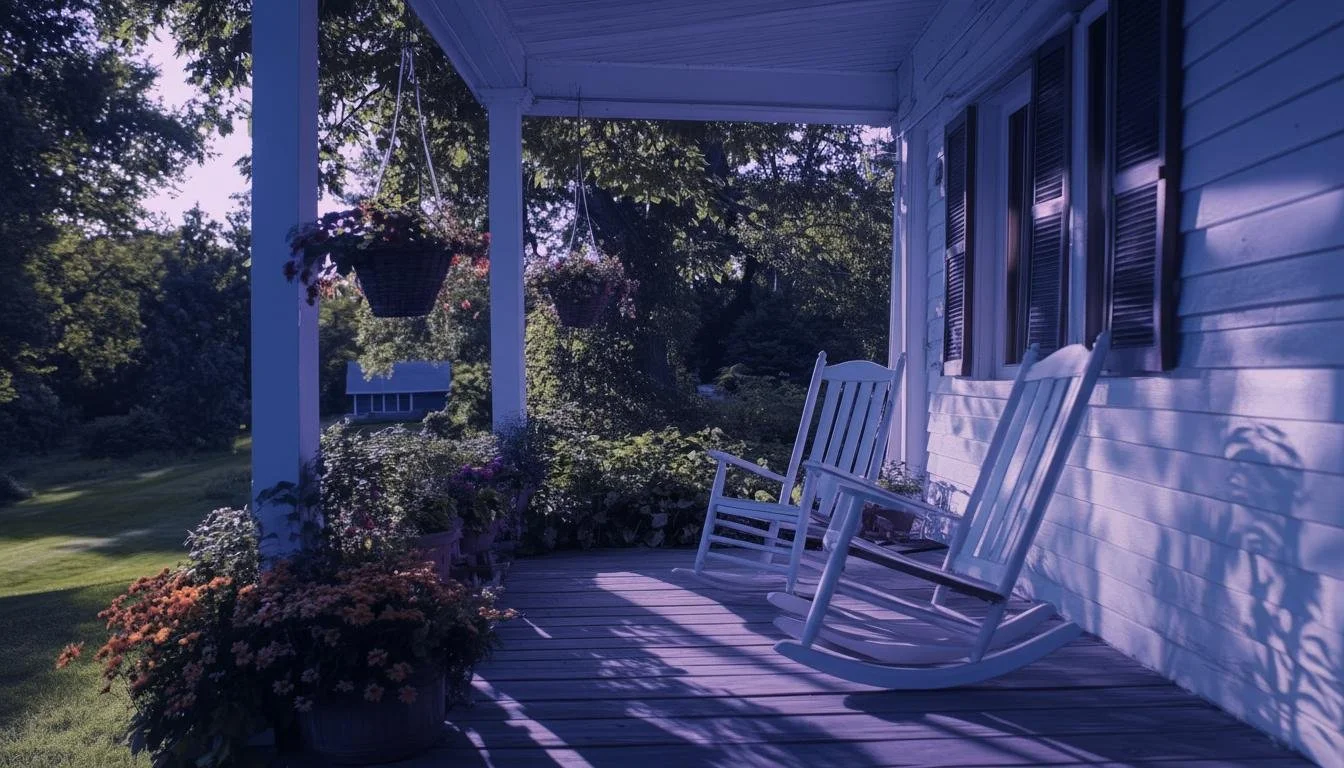
There Is a Before. There Is an After.
Most people can name the moment something shifted. The question is what you do with the before and the after once you see them clearly.
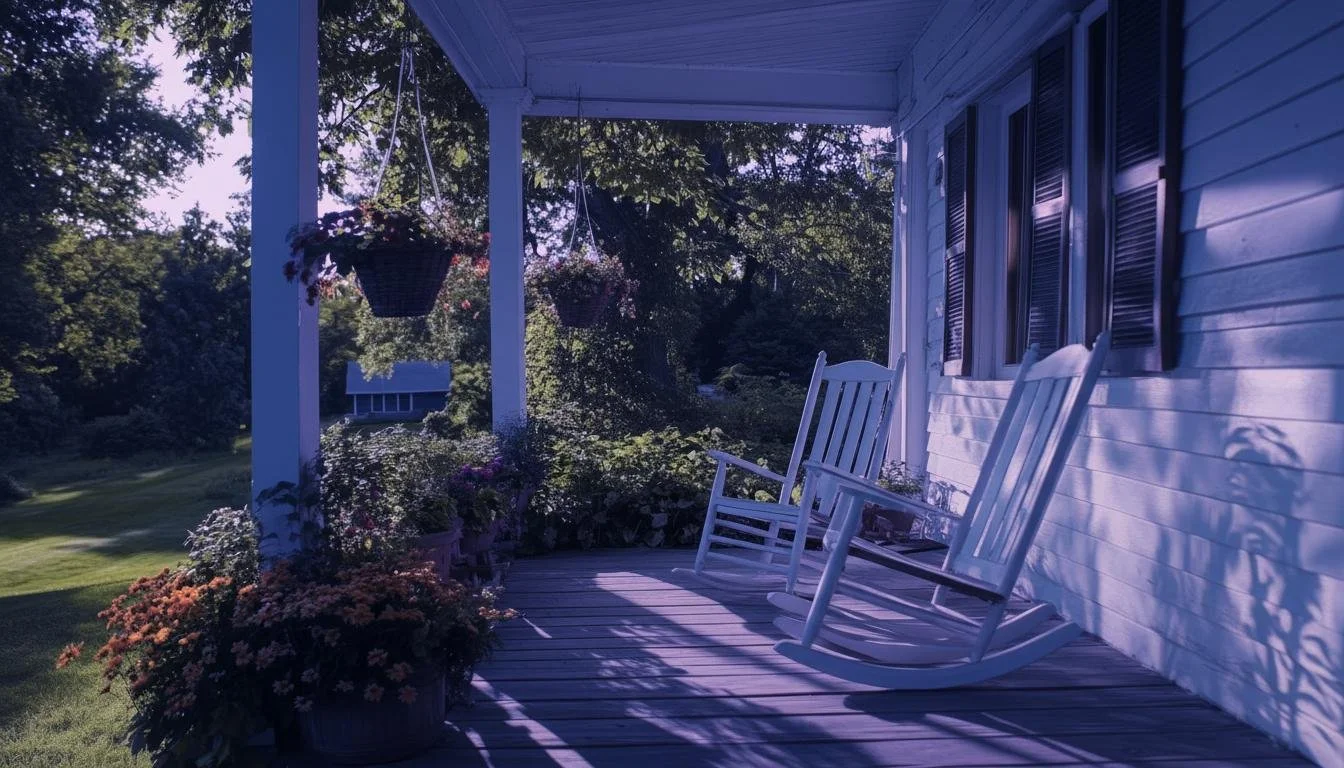
Most people can name the moment something shifted. The question is what you do with the before and the after once you see them clearly.
You know the moment.
It's different for everyone. For some people it was a loss — a death that reorganized the landscape so completely you still look up sometimes expecting to see the thing that used to be there. For others it was a slow drift — the gradual realization that you had become a different person than you intended, and you can't quite locate the point where the turning happened.
For some it was the weight of responsibility landing all at once. A child. A diagnosis. A decision nobody else would make. The day the world quietly appointed you the person in charge of something larger than yourself.
And for some, it was faith itself. A moment when the version of belief you had inherited stopped fitting the life you were actually living, and the gap opened up — and nobody gave you a map for that particular territory.
Before. After.
The strange thing about the before-and-after is what we do with it. Most of us, if we're honest, spend a significant amount of time living in the before while standing in the after. Measuring the distance. Accounting for what changed and who we were on the other side of it. Trying to recover something that may not be recoverable — or that maybe was never meant to be.
Here is what the before-and-after rarely gets told: the after is not a lesser place. It is a different place. And different is not the same as worse, even when it feels like it.
The person you are now — on this side of whatever shifted — has been formed by the crossing. You know things you didn't know before. You have capacity you hadn't built before. You have survived things that once would have seemed unsurvivable, and you are still here, still responsible, still showing up.
That is not nothing. In fact, it is evidence of something.
The question worth sitting with is not how to get back to before. That door is closed. The question is what you are being invited into in the after — and what it might mean to stop measuring the distance and start inhabiting the ground you're already standing on.
You are not lost. You are somewhere new.
And somewhere new, uncomfortable as it is, has always been where formation happens.
The after is yours. It has been, from the moment the crossing happened.
The invitation — quiet, without pressure — is to begin living like it.
If something here stayed with you, the Direction Series was written for exactly where you are. You can find it at directionseries.com.
The Porchlight is on. 🔆
© 2025 Wylette P. Tillman | Polaris Press LLC
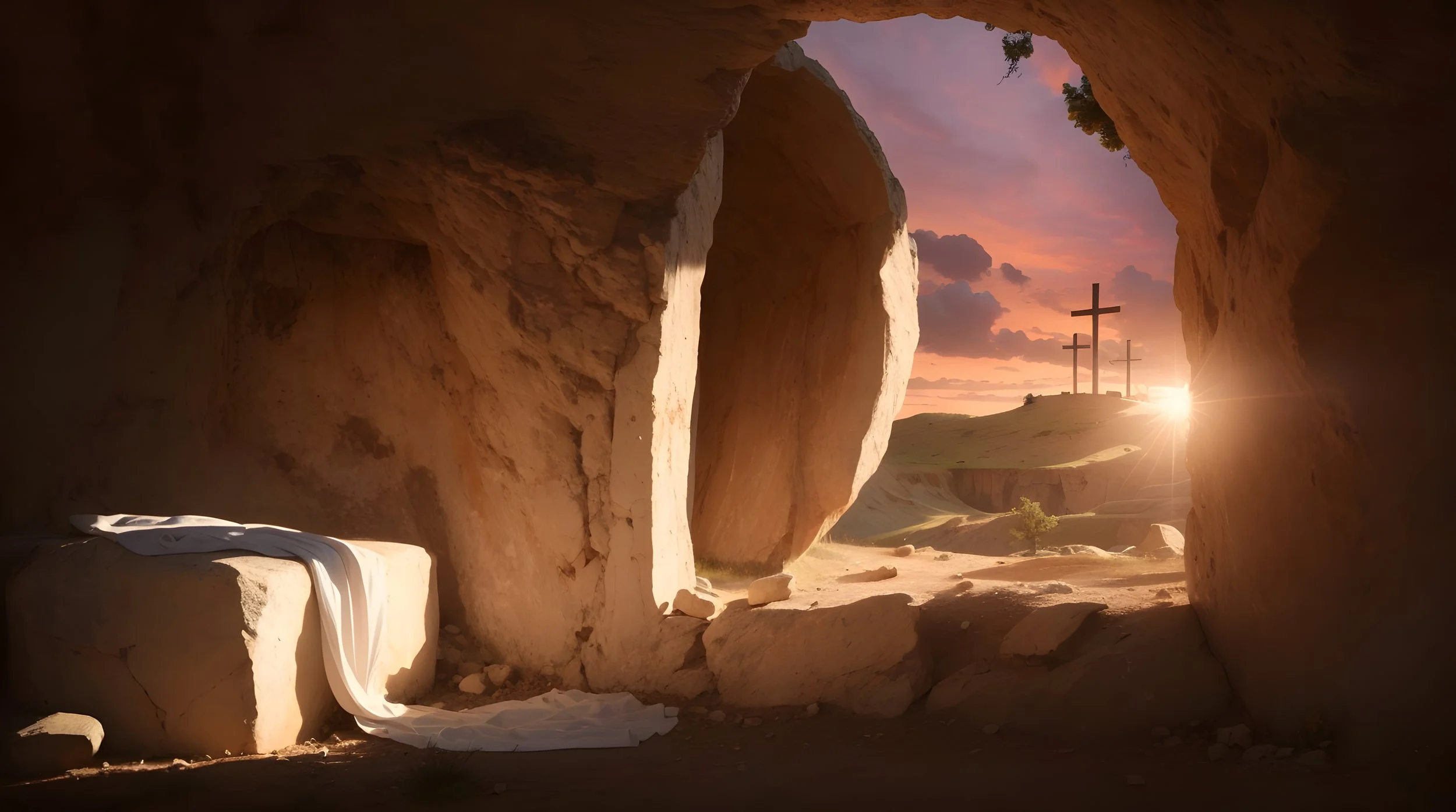
Sunday Came
It came. Not the way anyone expected. Not through the door anyone was watching. Sunday came.
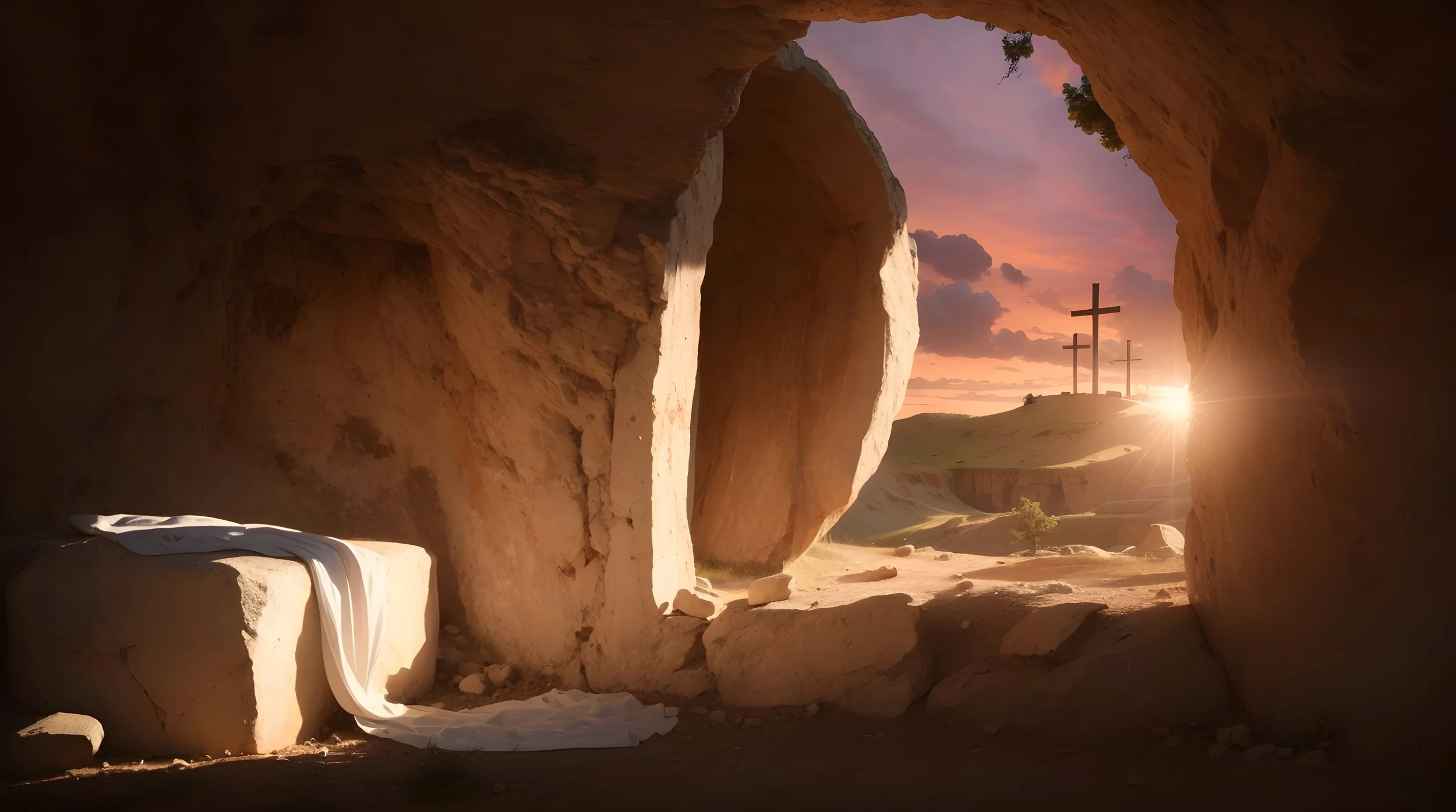
You waited. You stayed. And the thing you could not make happen - happened.
It came.
Not the way anyone expected. Not through the door anyone was watching. Not with the announcement they thought they were waiting for.
It came quietly, the way real things do. A garden. A name spoken. A moment so ordinary on the surface that the people closest to it almost missed it.
Sunday came.
And everything that Friday had said — it's over, it didn't work, you were wrong to believe — turned out to be wrong.
Not because the pain wasn't real. It was. Not because the loss didn't happen. It did. The cross was real. The tomb was real. The silence of Saturday was real.
But the silence was not the end of the sentence.
This is the thing about resurrection: it does not undo what happened. It does not pretend Friday was fine. It does not erase the scars — in fact, if you remember, the risen Christ still had them. He showed them. He let them be touched.
Resurrection does not mean the hard thing didn't happen.
It means the hard thing does not get the last word.
Some of you have been waiting for a long time. You have been faithful in the waiting — not always gracefully, not always with peace, but you have stayed. You have kept the line open. You have shown up even when showing up felt like going through the motions.
Sunday is for you.
Not as a reward for your faithfulness. Not as a transaction. But as a reminder that the story you are in is not over, that the silence you have been sitting in is not the final word, that the God who did not stay in the tomb is the same God who is present in whatever Friday you have been living.
You were not wrong to hope.
Sunday came.
And everything that wanted to tell you otherwise — was wrong.
If something here stayed with you, the Direction Series was written for exactly where you are. You can find it at directionseries.com.
The porchlight is on. 🔆
© 2025 Wylette P. Tillman | Polaris Press LLC

What Stillness Actually Feels Like
Most of us have a fantasy version of stillness. It involves a cabin somewhere. This post is about what stillness actually feels like — and how to find it.

Not the absence of noise. Not the end of responsibility. Something quieter than that — and harder to reach.
Most of us have a fantasy version of stillness.
It involves a cabin somewhere. Or a morning before everyone wakes up. Or a beach, or a long drive, or a moment when the to-do list is finally clear and the world has agreed, just for a little while, to ask nothing of you.
That version of stillness is real. When you can find it, take it. But it is not the kind of stillness that actually changes something. It is a reprieve, not a formation.
The stillness that changes you doesn't wait for the cabin. It doesn't require the to-do list to clear. It is available in the middle of the noise — which is both the hard news and the good news, depending on where you are right now.
Here is what stillness actually feels like when you find it:
It feels like stopping the narration for a moment. We all carry a running commentary in our heads — an assessment of how things are going, what still needs doing, what we got wrong, what we have to figure out by Friday. Stillness is not the absence of that voice. It's the moment the voice stops being the loudest thing in the room.
It feels like letting something be unresolved. Most of us have a deep discomfort with open loops. We want to know what happens next. We want to have a plan. Stillness requires tolerating the not-yet — sitting with a question that doesn't have an answer yet without immediately reaching for something to fill the space.
It feels, sometimes, like grief. Because when you stop moving long enough to be still, things rise to the surface that the movement was keeping down. This is not a malfunction. It is the work. The things that rise are the things that need tending. They have been waiting patiently for you to stop long enough to let them come up.
And sometimes — not always, but sometimes — stillness feels like something shifting. Something settling into place. Not a solution. Not an answer. But the quiet sense that you are not, actually, alone in this. That something beneath the surface of your life is more stable than the surface suggests.
This is what Volume 3 of the Direction Series moves toward. Discernment — the ability to see clearly, to hear what is actually being said beneath the noise, to tell the difference between your own fear and the quiet voice that has something to say about your life — requires stillness as its foundation.
You cannot discern in motion. You can manage in motion. You can perform in motion. But the deeper work — the work of knowing what you actually believe, what you actually want, where you actually are — that work requires you to stop long enough to hear yourself think.
And most of us haven't stopped in a long time.
Not because we're lazy or spiritually careless. But because the world around us is extraordinarily loud and the people depending on us are extraordinarily real, and the gap between the pace of your life and the pace required for this kind of inner work can feel impossible to close.
It isn't impossible. But it is a practice. And like any practice, it begins badly before it begins well.
The first time you try to be still — really still, not just quiet — you will probably feel restless. Your mind will offer you a hundred things to think about instead. Your body will remember something you forgot to do. You will wonder if this is working.
That is the practice. That is day one.
And day two is almost the same. And day three.
And then somewhere, quietly, without announcement — something shifts. You find yourself able to sit inside a question without immediately fleeing it. You find yourself less afraid of the unresolved. You find the narration softening. You find something underneath all of it that has been there the whole time, waiting.
Stillness doesn't solve your problems. It reorients you toward them. And sometimes — especially when you've been carrying things alone for a long time — reorientation is the most valuable thing in the world.
Give yourself five minutes today. Not to pray necessarily. Not to read. Just to stop the narration for a moment.
See what rises. Let it. That's where discernment begins.
If something here stayed with you, the Direction Series was written for exactly where you are. You can find it at directionseries.com.
The Porchlight is on. 🔆
© 2025 Wylette P. Tillman | Polaris Press LLC
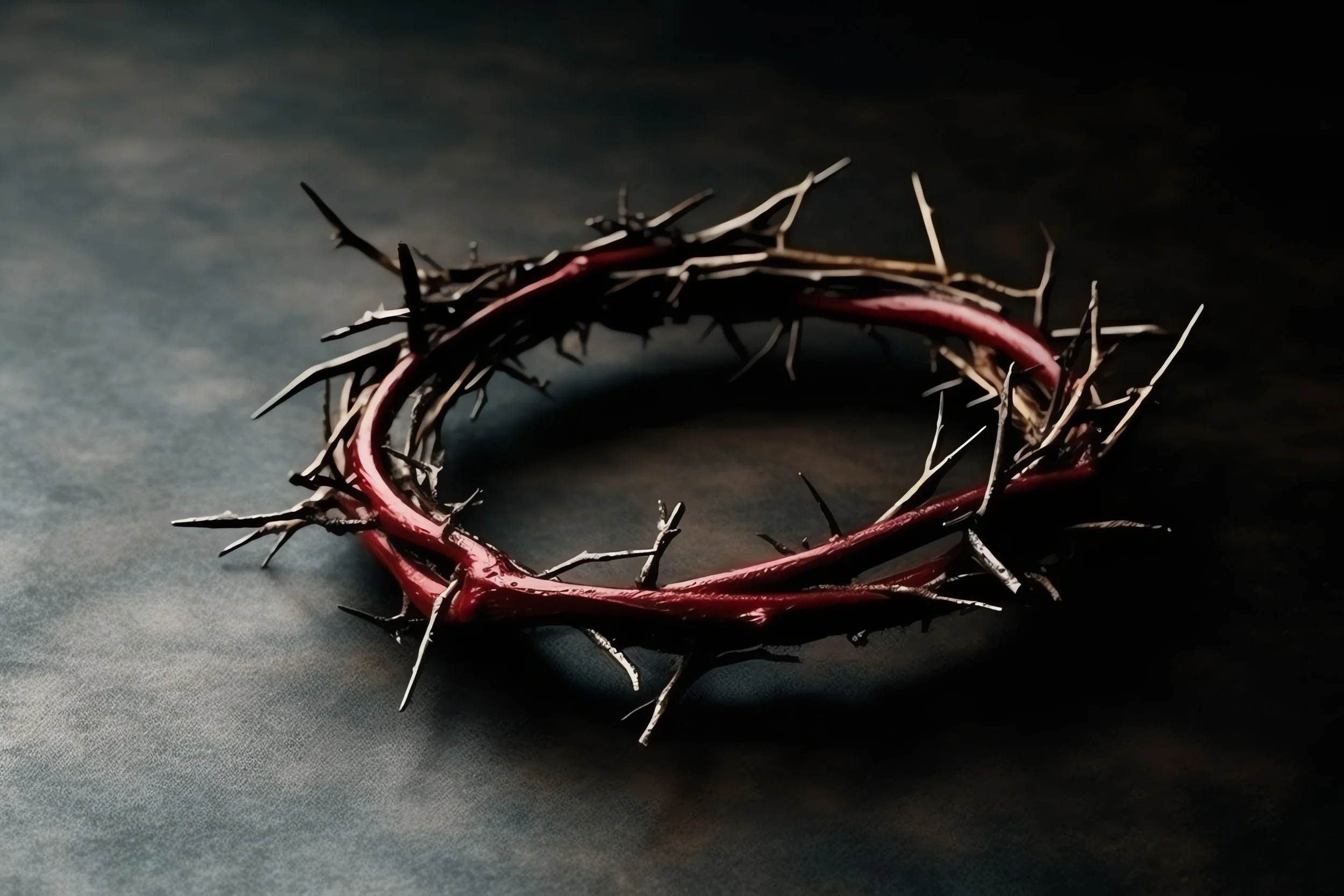
The Silence of Friday
You know this day. Not just as a date on the liturgical calendar. You know it the way the body knows it.
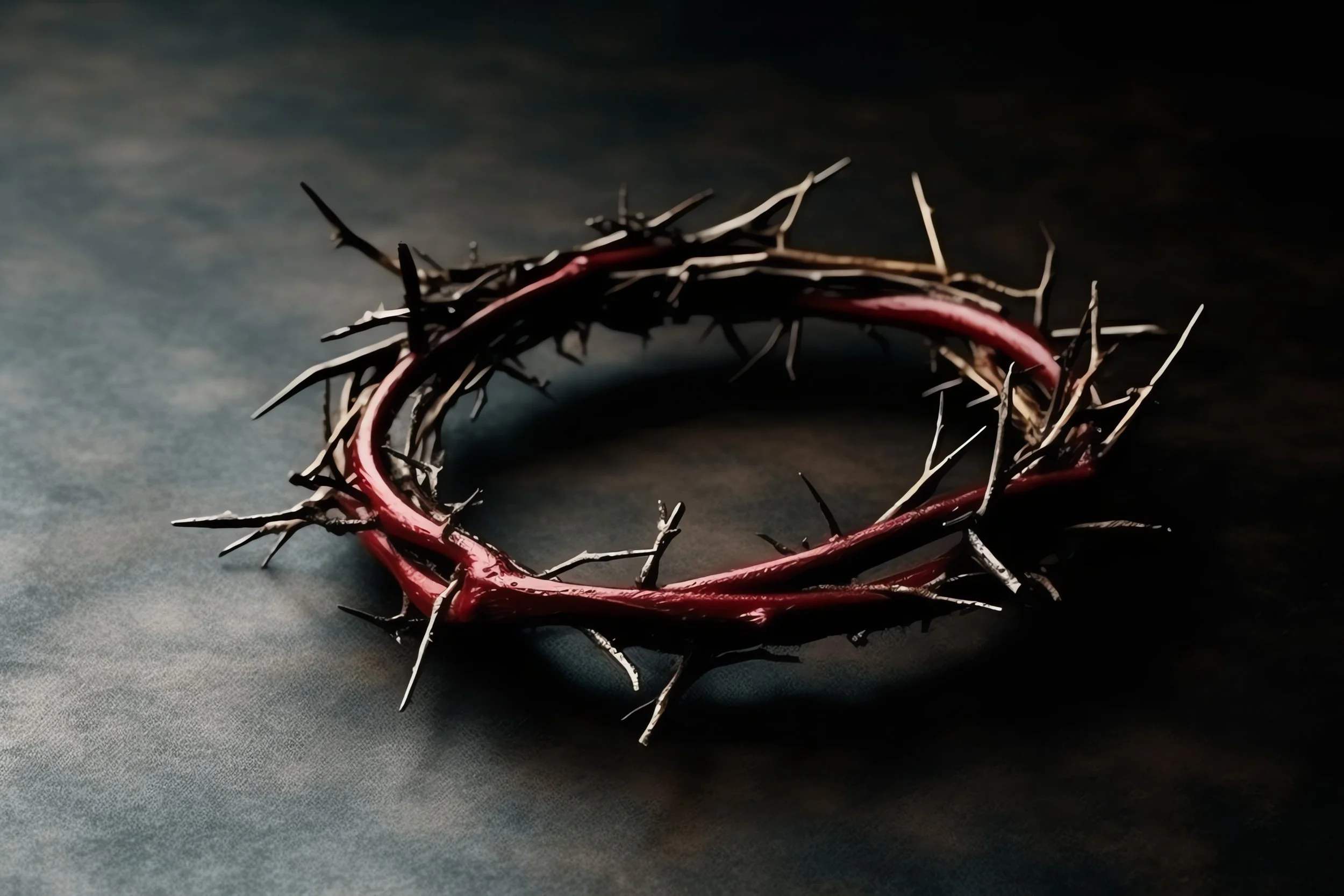
There is a day between the cross and the empty tomb. Most of us live there.
You know this day.
Not just as a date on the liturgical calendar. You know it the way the body knows it. The way the room gets quiet after something irreversible happens. The way you keep moving — because what else is there to do — while something inside you has gone completely still.
Good Friday is the day everything stopped.
The disciples did not know Sunday was coming. That is the part we forget every year because we already know how the story ends. We read it backwards. We sit in the darkness of Friday with Easter already in our pocket, which means we never really sit in the darkness of Friday at all.
But some of you know what it is to wait without knowing the ending.
Some of you are in a Friday right now. Not a liturgical one. A real one. The kind where something you believed in — a relationship, a dream, a version of yourself, a prayer you prayed for years — has gone quiet. And you are sitting in the aftermath, not sure what comes next, not sure anything comes next.
This post is not going to tell you Sunday is coming.
You already know that. And knowing it doesn't always make Friday easier to survive.
What this post will say is this: Friday is not a mistake in the story. It is part of the story. The waiting is not evidence that something went wrong. It is the space where everything that is being made new has not yet arrived.
You are allowed to sit in that space.
You are allowed to not be okay today.
You are allowed to say — out loud, or just to yourself — this is hard, and I don't know what comes next, and I am still here.
That is not a failure of faith.
That might be the most honest form of it.
If something here stayed with you, the Direction Series was written for exactly where you are. You can find it at direction-series-bible-study.squarespace.com.
The porchlight is on. 🔆
© 2025 Wylette P. Tillman | Polaris Press LLC

You Were Not Meant to Hold This Alone
There is a specific kind of tired that comes from being the one who holds everything together. This post is for that kind of tired.

There is a specific kind of tired that comes from being the one who holds everything together. This post is for that kind of tired.
You know the kind.
It's not the tired that comes from a hard day. A hard day ends. You sleep it off. You return to yourself.
This is the tired that accumulates. That layers itself, quietly, over months and years of being the one who figures things out. The one who doesn't fall apart because someone has to hold the center. The one people call. The one people lean on. The one who stays.
And you have stayed. You have held the center. You have shown up in ways that will probably never be fully named or recognized, because the people who needed you most were too in the middle of their own crises to see everything you were carrying to get to them.
That is not a complaint. You would do it again. You would do it tomorrow.
But here is what is true: you were not designed for isolation. The strength you carry was never meant to be carried alone. The weight was never meant to be a solo assignment.
Somewhere in the way we talk about strength — particularly the strength of the person who leads, who provides, who holds others together — we have confused strength with self-sufficiency. We have made an idol of not needing. And the cost of that idol is the specific kind of loneliness that lives inside a full house, inside a functioning life, inside a person who appears to have it together.
The loneliness of being the strong one is real. It doesn't require crisis to activate. It's just there — a low hum beneath the surface of a life that, from the outside, looks like it's working.
What would it mean to set the weight down? Not forever. Not irresponsibly. Just for a moment. Just long enough to admit it's heavy.
You don't have to figure out the next step to do that. You don't have to know what support looks like or who to call or how to begin.
You just have to stop pretending it isn't heavy.
That's the beginning. And it is allowed to be enough for today.
If something here stayed with you, the Direction Series was written for exactly where you are. You can find it at directionseries.com
The Porchlight is on. 🔆
© 2025 Wylette P. Tillman | Polaris Press LLC

When Believing Isn't Enough
You believe. You have always believed. So why does faith feel like work right now instead of rest? That question deserves an honest answer.

You believe. You have always believed. So why does faith feel like work right now instead of rest?
That question deserves an honest answer. Not a formula. Not a Bible verse handed over like a cough drop. An honest answer.
Here is one: faith feeling like work is not evidence that something is wrong with you. It may be evidence that something is very, very right — that you are taking it seriously enough to feel the weight of it. That you haven't flattened it into a set of habits and called that belief.
The people who have always told you that faith should feel like peace — they are not lying. Peace is real. Rest is real. But peace is not the same as easy, and rest is not the absence of effort. Anyone who has ever rested deeply knows it sometimes requires more work to stop than to keep going.
The question underneath the question is usually this: Am I the problem? Is something broken in me that makes this harder than it seems to be for everyone else?
And the answer — the one that doesn't get said often enough — is that it isn't harder for everyone else. It only looks that way from where you're standing. Most people who appear to have it together in the pew are having some version of the same conversation with themselves on the drive home.
You are not uniquely broken. You are not uniquely faithless. You are a person who carries real things and who is honest enough — even if only privately — to admit that the gap between what faith promises and what daily life delivers is real, and wide, and sometimes exhausting to stand in.
That honesty is not the opposite of faith. It might actually be a form of it.
The Psalms are full of people arguing with God. Demanding answers. Saying the silence feels like absence. And the text doesn't correct them. It records them. It preserves them. It treats their wrestling as sacred enough to write down.
So, here is what this post will not do: it will not tell you to try harder, pray more, or that your doubt is actually a faith opportunity in disguise. You have heard those things. They didn't help, or you wouldn't still be carrying the question.
What this post will say is simpler: you are allowed to be exactly where you are. The gap you are standing in is not a sign that you have failed. It may be the most honest place you have ever stood.
That's not nothing.
In fact, it might be exactly where something new begins.
If something here stayed with you, the Direction Series was written for exactly where you are. You can find it at directionseries.com.
The Porchlight is on. 🔆
© 2025 Wylette P. Tillman | Polaris Press LLC

The Weight Has a Name
You've been carrying something you haven't had words for. That doesn't mean it isn't real. It just means no one has named it yet.
Reflection · 2 min read

You've been carrying something you haven't had words for. That doesn't mean it isn't real. It just means no one has named it yet.
There are things you carry that you cannot explain to anyone.
Not because you don't want to. Not because the people around you aren't trustworthy enough. But because the thing itself doesn't have a name yet — and you've learned that the moment you try to say something you can't fully articulate, it comes out wrong. It sounds like complaining. Or weakness. Or something that requires a response from the other person you don't want to have to manage.
So you don't say it. You just carry it.
You carry it at the dinner table, looking present. You carry it in the parking lot before going in. You carry it at 2am when the rest of the house is quiet and something in your chest won't settle the way it should.
The weight is real. You have not invented it. You are not being dramatic. You are not in crisis — you are simply in the gap between what you know on Sunday and what you live Monday through Saturday, and that gap is heavier than most people will ever acknowledge.
What nobody talks about is this: the weight doesn't need you to lift it immediately. It needs you to stop pretending it isn't there.
Because the moment you name a thing — even privately, even just to yourself — something shifts. Not dramatically. Not with fanfare. But the thing stops having power over you the way unnamed things do. Unnamed things grow in the dark. Named things can be held up to the light.
You have been functioning. You have been responsible. You have shown up for the people who depend on you, day after day, without asking for much in return.
That is not nothing. In fact, it is a great deal.
But functioning is not the same as free. And carrying things quietly is not the same as peace.
The weight has a name. You may not find it today. But the looking — the willingness to admit there is something to look for — is where things start.
You don't have to have it figured out. You just have to be honest enough to say: something is here. Something I've been carrying. Something that deserves more than silence.
That's enough. That's where this begins.
If something here stayed with you, the Direction Series was written for exactly where you are. You can find it at directionseries.com.
The Porchlight is on. 🔆
© 2025 Wylette P. Tillman | Polaris Press LLC

Presence Is a Form of Love
There are people who go right away to productivity mode. And we mean them well. But being present is its own kind of gift.
Moment · 1 min read

There are people sitting right next to us who feel invisible.
Not because they aren’t loved.
Not because they aren’t surrounded.
But because presence has quietly become rare.
We live busy lives — full calendars, constant movement, endless noise.
We attend events. We answer messages. We show up physically.
And yet… something is missing.
Not time.
Attention.
Presence asks more of us than proximity.
It asks us to pause long enough to notice who is in the room.
To listen without preparing our response.
To sit without reaching for something else.
Scripture says:
“Here I am! I stand at the door and knock. If anyone hears my voice and opens the door, I will come in and eat with that person, and they with me.”
— Revelation 3:20
Notice what He offers.
Not instruction.
Not correction.
A shared table.
A meal.
A moment.
Attention given freely.
So many of us are longing to be heard by God —
and yet we struggle to offer that same presence to one another.
We scroll while someone speaks.
We multitask through conversations.
We fill silence instead of honoring it.
Not because we don’t care —
but because we’ve forgotten how to be still long enough to see.
True intimacy means into-me-see.
It requires openness, yes — but also witness.
To be present is to say, without words:
I see you.
You matter.
You are not alone in this moment.
And sometimes love doesn’t look like fixing anything at all.
Sometimes love looks like staying.
Listening.
Letting the moment be enough.
You may not realize it, but your presence could be the knock someone else is waiting to hear.
So tonight — or tomorrow — try something simple.
Put the phone down.
Look across the table.
Sit a little longer than usual.
Presence, offered freely, has a way of opening doors.
The Porchlight is on. 🔆
© 2025 Wylette P. Tillman | Polaris Press LLC

Make Yourself at Home
Go ahead. Sit down and stay a while. There's something deeply uncomfortable for many of us about being still — and it's worth asking why.
Reflection · 2 min read

Go ahead. Sit down and stay a while.
There’s something deeply uncomfortable for many of us about being still. Not because we don’t want rest—but because we’ve learned, somewhere along the way, that rest must be earned. That pausing needs permission. That taking a few minutes for ourselves means something else will be neglected.
So even when we sit down, our minds keep moving.
Even when we stop, we’re already thinking about what comes next.
But making yourself at home doesn’t mean you’re done for the day.
It doesn’t mean you’re avoiding responsibility.
It doesn’t mean you’re falling behind.
It simply means you’ve allowed yourself five minutes to arrive.
Most of us move through our days responding—to messages, to demands, to expectations, to noise. And we do it so well that we forget what it feels like to choose presence instead of reaction. To let our shoulders drop. To unclench our jaw. To breathe without an agenda.
Five minutes won’t solve everything.
It isn’t meant to.
But it can interrupt the spiral.
It can quiet the urgency.
It can remind you that you are more than what needs to be handled next.
There’s no guilt required here. No apology necessary. You don’t need a reason that sounds productive enough. You don’t need to explain this pause to anyone—not even yourself.
Making yourself at home is not about staying forever.
It’s about remembering where you are before you keep going.
If you’ve been carrying more than you realized…
If you’ve been holding it together longer than you planned…
If you’ve been strong so consistently that you forgot what rest feels like…
You’re allowed to sit down.
You’re allowed to stay for a moment.
You’re allowed to let the noise wait outside.
This isn’t quitting.
It’s centering.
And sometimes, that’s the most responsible thing we can do.
“Be still, and know that I am God.”
— Psalm 46:10
The Porchlight is on. 🔆
© 2025 Wylette P. Tillman | Polaris Press LLC
Let’s Sit for a Moment
I was hoping you'd stop by. There's no checklist out here — nothing you have to be ready for or prove.
Reflection · 2 min read
I was hoping you’d stop by.
There’s so much noise out there.
Even when nothing is technically wrong, it can feel like everything is loud—expectations, opinions, urgency, information. The kind of noise that doesn’t shout, but hums constantly in the background. The kind that makes it hard to tell what you actually think, or feel, or need.
So before anything else, let me say this:
You don’t have to figure anything out right now.
You don’t have to decide where you’re going.
You don’t have to fix what feels unfinished.
You don’t have to be “ready” for something new.
You’re allowed to just… sit.
I’ve been thinking a lot about how rarely we give ourselves that permission. Even our quiet time becomes a task. Even reflection turns into effort. Even faith can start to feel like something we’re managing instead of something that’s holding us.
But some of the most meaningful moments in life don’t happen because we did something.
They happen because we stayed.
Because we listened.
Because we let the moment be enough.
That’s the spirit behind Direction—and behind this space.
Not instruction.
Not urgency.
Not answers on demand.
Just a place where the porchlight is on.
Think back to a time when you visited someone you love—a grandmother, a father, an aunt. Someone who didn’t rush you or press for details. Someone who didn’t need you to have the words just right.
You probably didn’t leave with a neatly wrapped solution. The situation itself may not have changed at all. But you left lighter than when you arrived. Not because what you were facing wasn’t significant—but because their presence reminded you that this moment, however overwhelming or frightening it felt, would not consume you forever.
Their life experience quietly said: this too shall pass. Not dismissively. Not to minimize the weight of it. But as a steady assurance that whatever happens, a way forward will come—whether it unfolds exactly as you expect, differently than you imagined, or more gently than you feared.
Sometimes what lightens the load isn’t advice or answers. It’s knowing someone truly heard you. Really heard you. And stayed.
That kind of encouragement doesn’t solve everything—but it strengthens you enough to carry what comes next.
That’s the kind of visit I hope this feels like.
Maybe something has been sitting heavy on your shoulders.
Maybe you’ve been doing all the right things and still feel tired.
Maybe you haven’t slowed down long enough to notice what you’re actually longing for.
You don’t need to name it today.
Sometimes the most helpful thing isn’t clarity—it’s kindness.
Not direction yet—but rest.
Not answers—but space.
So take this moment for what it is.
Five minutes.
A breath.
A pause.
And when you’re ready to step back into the world—into your responsibilities, your people, your decisions—go gently.
You are not behind.
You are not lost.
You are not late.
You’re always welcome to sit for a while.
“Come to me, all who are weary and burdened, and I will give you rest.”
— Matthew 11:28
The Porchlight is on. 🔆
© 2025 Wylette P. Tillman | Polaris Press LLC